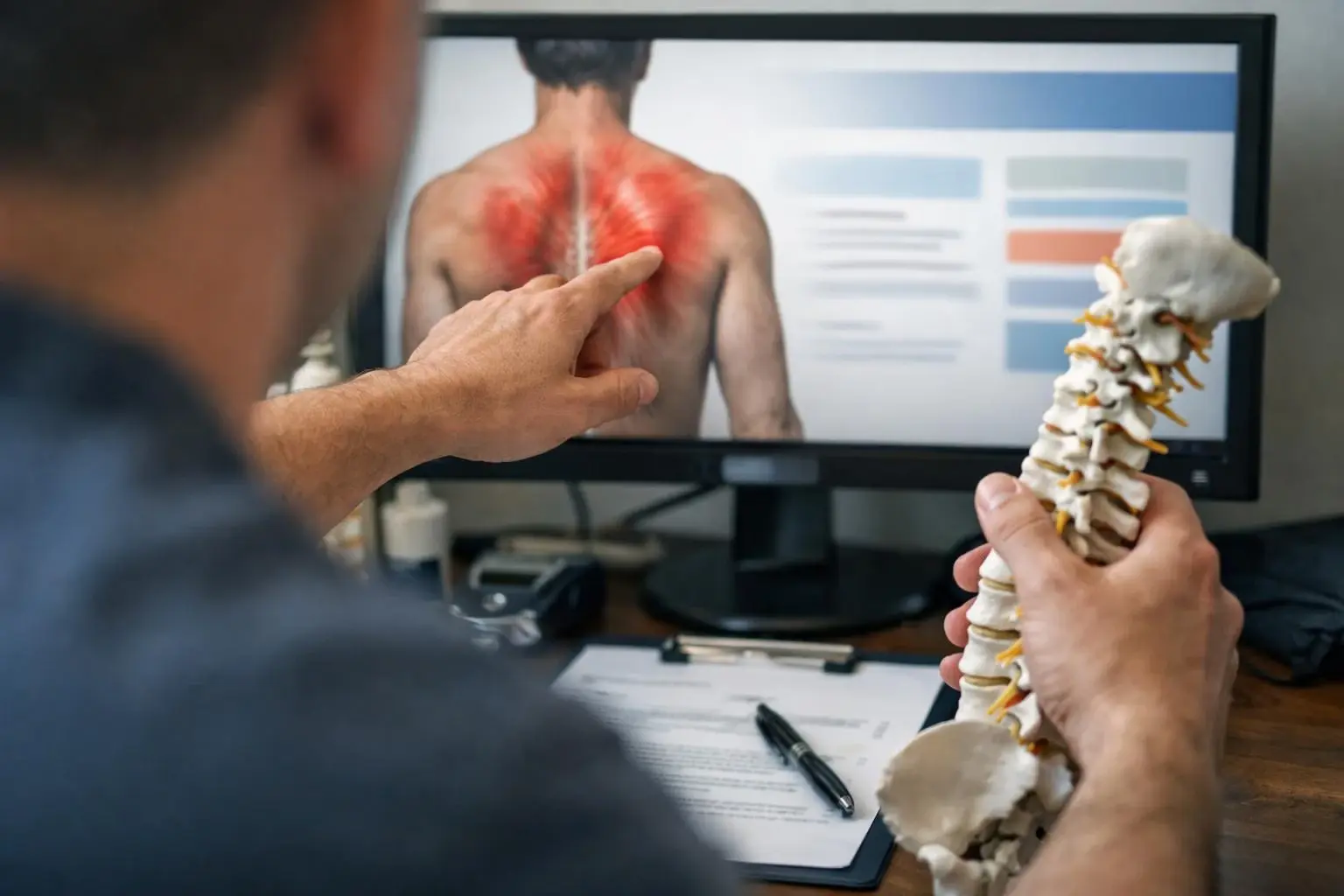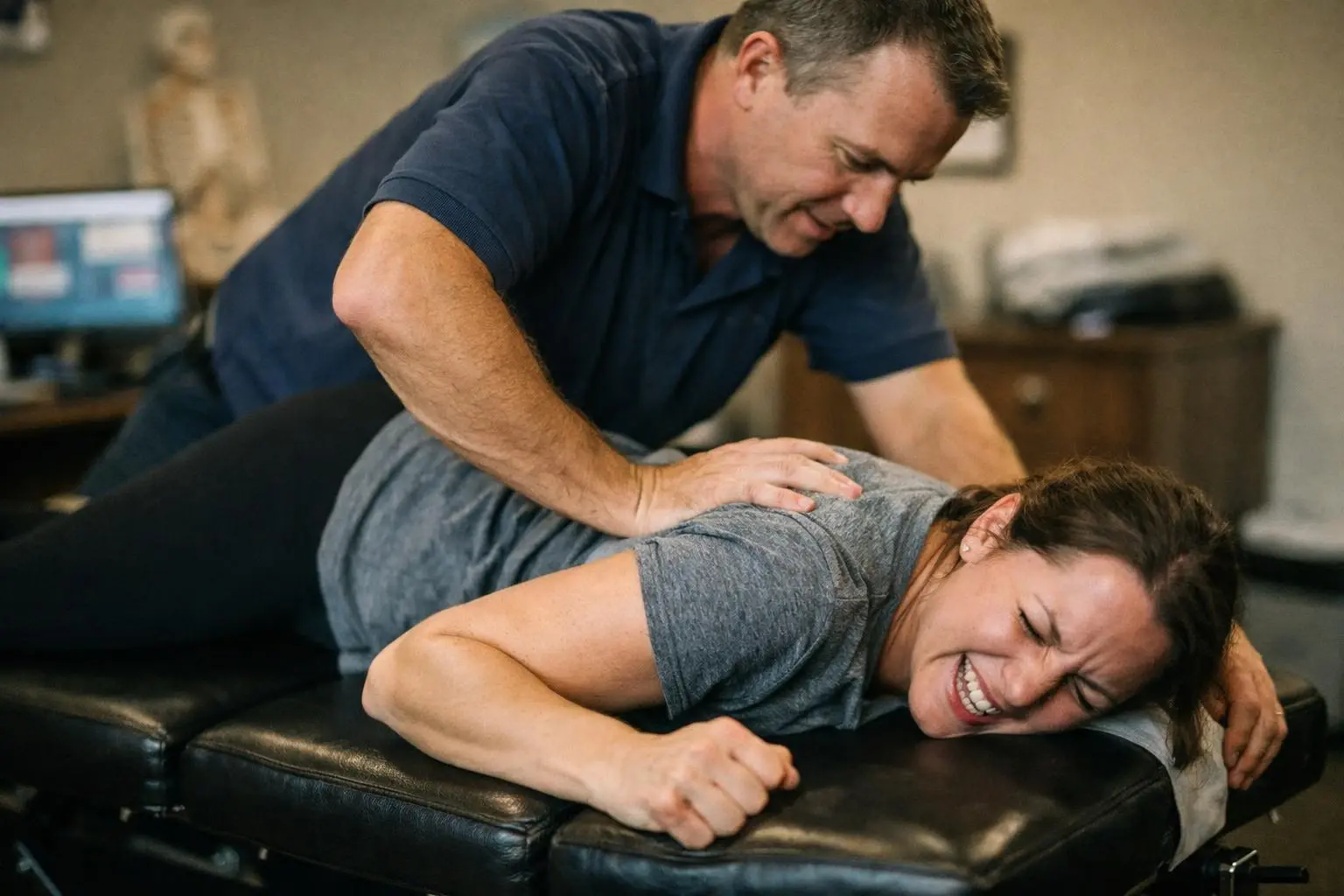
Muscle Spasm is a sudden, involuntary contraction of one or more muscles that can cause sharp pain, stiffness. Or a temporary inability to move the affected area. Muscle spasms often occur due to overuse, dehydration, electrolyte imbalances. Or nerve irritation and typically resolve within seconds to minutes. Though severe cases may require treatment.
Category
Musculoskeletal condition
Used for
Not applicable—muscle spasms are a symptom, not a treatment
Common confusion
Often mistaken for muscle cramps. Though spasms are shorter and more localized
Also called
Muscle twitch, Muscle contraction
Often discussed with
Chiropractic Consultation and Diagnosis, Neck Injury Treatment

A muscle spasm is a sudden tightening. It happens without you telling the muscle to move. This can feel like a sharp pain or a hard knot under your skin.
Related glossary terms: Back Pain, Nerve Compression, Pinched Nerve.
Spasms can happen in any muscle. They are most common in the back, neck, legs. And hands. Most spasms last only a few seconds.
Some spasms last longer. They can make daily tasks hard. They may keep coming back too.
Muscle spasms are not the same as cramps. Cramps hurt more and last longer. They often hit bigger muscle groups.
Spasms usually hit one muscle or a small group. They can happen after an injury. They can also come from swelling or a pinched nerve.
For example, lifting wrong can cause back spasms. Not drinking enough water can cause calf spasms. Knowing the difference helps you find the right fix.
Muscle spasms happen when nerves act up. These nerves control muscle movement. They send too many signals. So muscles tighten fast.
Normally, muscles tighten and loosen on purpose. But spasms break this rule. The muscle tightens when it shouldn't.
Not drinking enough water can cause spasms. So can low potassium or magnesium. These are called electrolytes (minerals in your body).
Tired muscles also spasm more. Nerve problems can cause spasms too. A pinched nerve is one example.
A herniated disc (a bulging spinal cushion) can pinch nerves. So can a crooked spine. This can make nearby muscles spasm.
Bad posture can strain muscles. Doing the same motion over and over can too. Both can lead to spasms.
Spotting these patterns helps stop future spasms.

Muscle spasms are not just annoying. They can mean bigger problems. These problems affect how you move and feel.
Often spasms mean your muscles are too tight. They can mean nerves are irritated. They can also mean you need more water or food.
If you ignore them, spasms can cause pain. They can make it hard to move. Your body may hurt in new ways to avoid pain.
Athletes and workers get spasms often. Hard jobs can cause them. So can sports.
Spasms can hurt performance. They can raise injury risk. They can make recovery take longer.
Even sitting too much can cause spasms. They can make standing or sleeping hard. Knowing why they happen helps you fix them.
You can find fixes that work. Then spasms won't come back.
Spasms worry doctors when they happen a lot. They worry if spasms last too long. Other bad signs are numbness, weakness. Or swelling.
These signs can mean a nerve is hurt. They can mean your spine is crooked. They can even mean diabetes or kidney disease.
Spasms down your leg can mean sciatica. This is a pinched nerve. Spasms in your neck with dizziness can mean spine trouble.
Sitting too long can cause spasms. So can not drinking enough water. A sudden jump in activity can too.
People healing from injuries get spasms. So do those just out of surgery. Muscles spasm as they learn to move again.
Fixing spasms early helps a lot. Stretching and drinking water can help. So can seeing a doctor.
This stops bigger problems later. It helps you heal faster too.
Muscle cramps are more intense, longer-lasting. And often involve larger muscle groups. While spasms are shorter and more localized.
A muscle strain is a tear or overstretching of muscle fibers. While a spasm is an involuntary contraction without structural damage.
Muscle spasms often serve as the body’s warning signal for underlying tension or nerve irritation. While hydration and stretching can help, persistent spasms may require a structural assessment to identify misalignments or nerve compression contributing to the problem.
After sitting at a desk for hours, a person notices a sharp pain in their lower back. The muscle feels tight and knotted, making it difficult to stand up straight. This sudden contraction is a muscle spasm, likely triggered by poor posture and prolonged sitting without movement.
Back Pain is discomfort, stiffness. Or aching anywhere along the spine, from the neck to the lower back. Back Pain can be sharp, dull, constant. Or occasional. And may spread to the legs or arms. It often results from muscle strain, injury, poor posture. Or underlying conditions like disc herniation or arthritis.
Nerve compression is a condition where surrounding tissues such as bones, muscles. Or tendons press on a nerve, causing pain, tingling, numbness. Or weakness. Nerve compression commonly occurs in the spine, wrists. Or elbows and can result from injury, repetitive motion.
Pinched Nerve is a condition where too much pressure is applied to a nerve by surrounding tissues, such as bones, cartilage, muscles. Or tendons. This pressure disrupts the nerve’s function, causing pain, tingling, numbness. Or weakness. Pinched Nerve often occurs in areas like the neck, back. Or wrists and can result from injury, poor posture.
Myofascial Release is a hands-on therapy that gently stretches and loosens the fascia, the thin layer of tissue covering muscles and organs. This technique helps reduce pain, improve movement. And restore flexibility by releasing tight or restricted areas in the fascia caused by injury, stress. Or poor posture.
Spinal Decompression is a non-surgical treatment designed to relieve pressure on the spine and spinal nerves. It uses gentle stretching to create space between vertebrae, helping to reduce pain from conditions like herniated discs, sciatica. Or spinal stenosis. The process promotes healing by improving blood flow and nutrient delivery to affected areas.
Arrowhead Clinic Chiropractor
Contact Arrowhead Clinic Chiropractor for practical guidance on Muscle Spasm and related chiropractor work in Newnan.