Glossary

What is Back Pain?

Back Pain is discomfort, stiffness. Or aching anywhere along the spine, from the neck to the lower back. Back Pain can be sharp, dull, constant. Or occasional. And may spread to the legs or arms. It often results from muscle strain, injury, poor posture. Or underlying conditions like disc herniation or arthritis.

Reviewed by Dr. Harry W. Brown, D.C.Sources reviewed: National Institute of Neurological Disorders and Stroke, Mayo Clinic

Quick Facts About Back Pain

Category

Musculoskeletal condition

Used for

Diagnosing spine or muscle-related discomfort

Common confusion

Back Pain vs. Kidney pain (kidney pain is often deeper and one-sided)

Also called

Spinal Pain, Lower Back Pain

Often discussed with

Chiropractic Consultation and Diagnosis

Key Takeaways About Back Pain

Understanding Back Pain

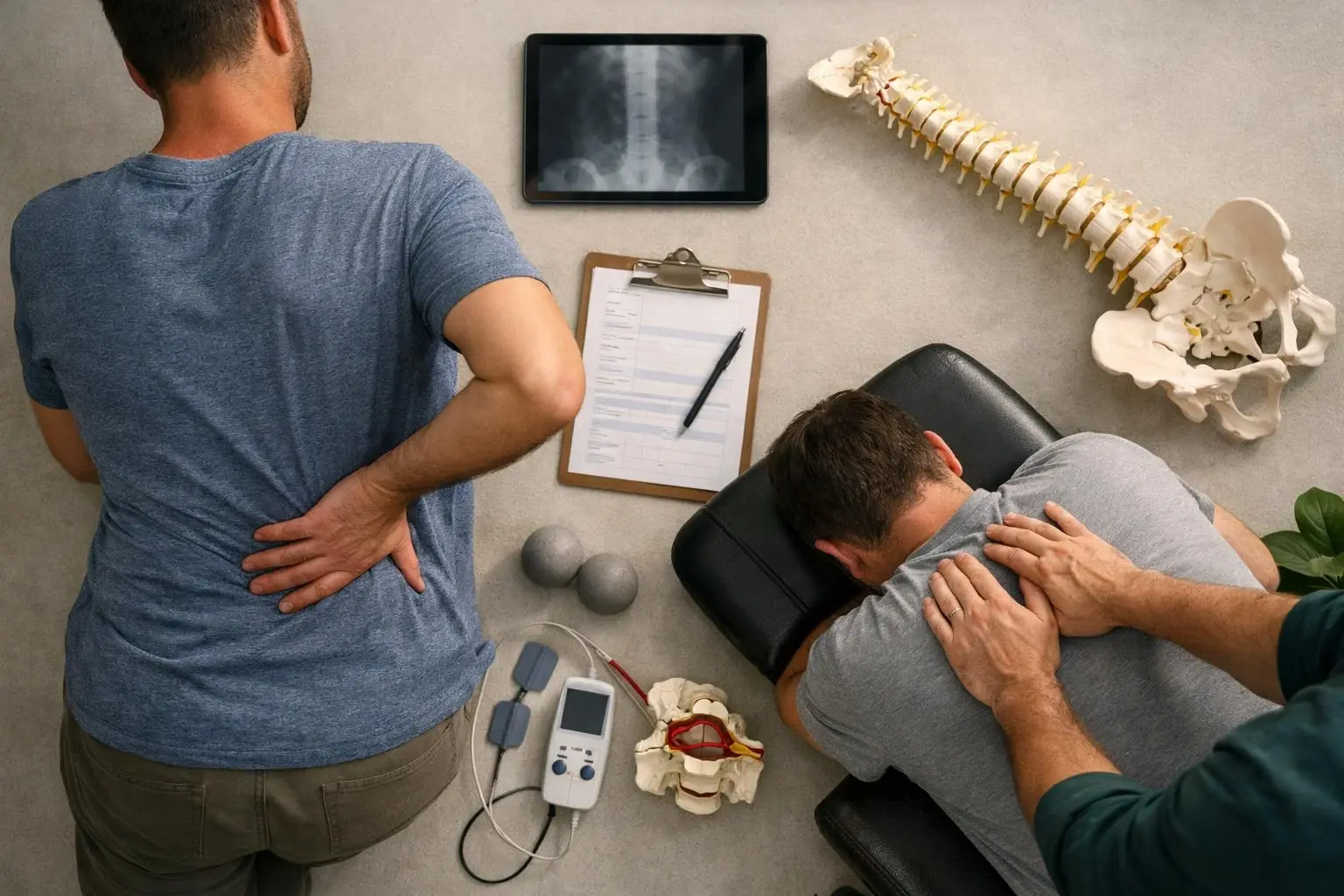
Back Pain in Chiropractor: Back Pain is discomfort, stiffness, Or aching anywhere along the spine, from—visual guide

Many people see a doctor for back pain. It is also a top reason people miss work.

Related glossary terms: Low Back Pain, Sciatica, Muscle Spasm.

Back pain can happen anywhere. Most often, it affects the lower back.

The spine is made of bones, muscles. And nerves. It also has discs (cushions between bones).

They all work together. This helps your body move and stay strong.

If any part gets hurt or strained, back pain can start. Pain may feel sharp or dull.

It might burn or throb. It can make sitting, standing. Or walking hard.

Back pain is grouped by how long it lasts. Acute (short-term) back pain starts fast.

It lasts a few days to weeks. It often comes from an injury.

Subacute back pain lasts 4 to 12 weeks. It may need a doctor’s help.

Chronic (long-term) back pain lasts over 3 months. It often needs ongoing care.

Knowing the type helps find the best way to treat it.

How Back Pain Works?

Back pain usually starts when something hurts the spine. Muscles or ligaments (bands of tissue) can strain.

Lifting heavy things wrong can cause this. Bad posture can also make muscles tired.

This can lead to pain. Sometimes the spine itself has problems.

A herniated disc (bulging cushion) can press on nerves. Arthritis (joint wear) can hurt too.

Pain may spread to arms or legs. It can cause numbness or weakness.

The body tightens muscles to protect the hurt area. This can help at first.

But it can also make pain worse. It cuts blood flow and makes you stiff.

Over time, this can lead to long-term pain. Doctors may use X-rays or MRIs (scans).

But many times, they just talk to you and check your back.

Why Back Pain Matters?

How Back Pain applies to Chiropractor services in Newnan, United States—practical illustration

Back pain affects daily life. It can make work, sleep. And fun hard.

Even mild pain can be tough. Severe pain can stop you from moving.

It costs a lot of money. Bills, lost pay. And disability add up.

Back pain can also hurt your mood. It may cause stress or sadness.

Stopping back pain early is best. Once it lasts long, it’s harder to fix.

Good posture helps. So do exercise and lifting right.

If pain starts, treat it fast. This keeps it from lasting too long.

Most people get better with rest. Pain relievers (medicine) can help.

Gentle movement helps too. But see a doctor if pain is bad.

Also go if it lasts weeks. Fever or weight loss mean go now.

When Back Pain Matters Most?

Back pain matters most when it stops daily tasks. It may signal a big problem.

Pain with numbness or weakness can mean a pinched nerve. A herniated disc (bulging cushion) may cause it.

Pain after a fall may mean a broken bone. See a doctor fast.

If pain lasts weeks, get help. So do if it keeps coming back.

Some people are at higher risk. Older adults are one group.

So are those who lift heavy things. People with past back problems too.

Back pain also matters if it hurts your life. Can’t sleep? Can’t work?

Can’t enjoy hobbies? Then find help.

Some get help from physical therapy (exercise treatment). Others see a chiropractor (back doctor).

Yoga or stretching can help too. Medicine may be needed.

Rarely, surgery is needed. The key is to act early.

Find a plan that works for you. Don’t wait—pain can get worse.

How to Evaluate Back Pain?

Related Concepts Compared

Back Pain vs. Neck Pain

Neck Pain affects the upper spine and shoulders. While Back Pain occurs anywhere along the middle or lower spine.

Back Pain vs. Sciatica

Sciatica is a type of Back Pain caused by a pinched nerve in the lower back, often radiating down the leg.

Back Pain vs. Muscle Spasm

Muscle Spasm is a sudden, involuntary tightening of muscles, often causing Back Pain. But not all Back Pain involves spasms.

Expert Note

Back Pain is often multifactorial—muscle tension, joint dysfunction. And lifestyle habits like prolonged sitting all contribute. Addressing all these factors, not just the pain itself, leads to better long-term outcomes.

Common Mistakes or Myths About Back Pain

  • Ignoring Back Pain and hoping it will go away on its own, which can lead to chronic issues.
  • Assuming all Back Pain is caused by muscle strain, when it could be a sign of a serious condition.
  • Using heat on a new injury instead of ice, which can increase swelling and pain.
  • Staying in bed for days when Back Pain flares up, as too much rest can weaken muscles and worsen pain.
  • Lifting heavy objects with a rounded back instead of bending the knees, which strains the spine.

Back Pain in Practice: A Real-World Example

After sitting at a desk for hours, a person feels a dull ache in their lower back. The pain worsens when they stand up but improves after walking around. They realize their chair lacks support. So they adjust their posture and take breaks to stretch. The Back Pain lessens over time with these changes.

Sources & Further Reading on Back Pain

Related Services

Related Terms

Low Back Pain

Low Back Pain is discomfort or pain located in the lower part of the spine, between the bottom of the rib cage and the top of the legs. Low Back Pain can range from mild to severe and may limit movement, affect daily activities. Or signal an underlying condition like muscle strain, disc injury. Or arthritis. It is one of the most common reasons people visit healthcare providers.

Sciatica

Sciatica is pain that radiates along the path of the sciatic nerve, which runs from the lower back through the hips and buttocks and down each leg. Sciatica typically affects only one side of the body and occurs when the nerve is compressed or irritated, often due to a herniated disc, bone spur. Or spinal stenosis.

Muscle Spasm

Muscle Spasm is a sudden, involuntary contraction of one or more muscles that can cause sharp pain, stiffness. Or a temporary inability to move the affected area. Muscle spasms often occur due to overuse, dehydration, electrolyte imbalances. Or nerve irritation and typically resolve within seconds to minutes. Though severe cases may require treatment.

Disc Herniation

Disc herniation is a spinal condition where the soft inner gel of a spinal disc leaks through a tear in its tough outer layer. This leakage can press on nearby nerves, causing pain, numbness. Or weakness in the back, arms. Or legs. Disc herniation often occurs in the lower back or neck due to injury, aging.

Spinal Stenosis

Spinal Stenosis is a narrowing of spaces within the spine that puts pressure on the nerves traveling through it. This condition most commonly occurs in the lower back and neck, often causing pain, numbness. Or weakness in the legs, arms. Or torso. Spinal Stenosis typically develops slowly over time due to aging, arthritis. Or injury. And it can limit daily activities if left untreated.

Arrowhead Clinic Chiropractor

Have Questions About Back Pain?

Contact Arrowhead Clinic Chiropractor for practical guidance on Back Pain and related chiropractor work in Newnan.

+1 770-692-1041