Understanding Nerve Compression
A nerve gets squeezed. This happens by bones, muscles. Or other parts. The squeeze stops the nerve from working right.
This causes pain, tingling. Or numbness. It can also make muscles weak. For example, sciatica hurts down the leg.
Another example is carpal tunnel. This makes hands numb and weak.
Nerves send signals to the brain. They work like wires. When squeezed, signals don't get through.
Think of a kinked hose. Water can't flow well. The same happens to nerves.
How bad it feels depends on the squeeze. A little squeeze may hurt for a short time.
A hard squeeze for a long time can hurt the nerve forever.
How Nerve Compression Works?
Nerves go through tight spaces. These spaces can get smaller. Then nerves get squeezed.
Spinal nerves leave the spine. They go through small holes in bones. If bones move, nerves get pressed.
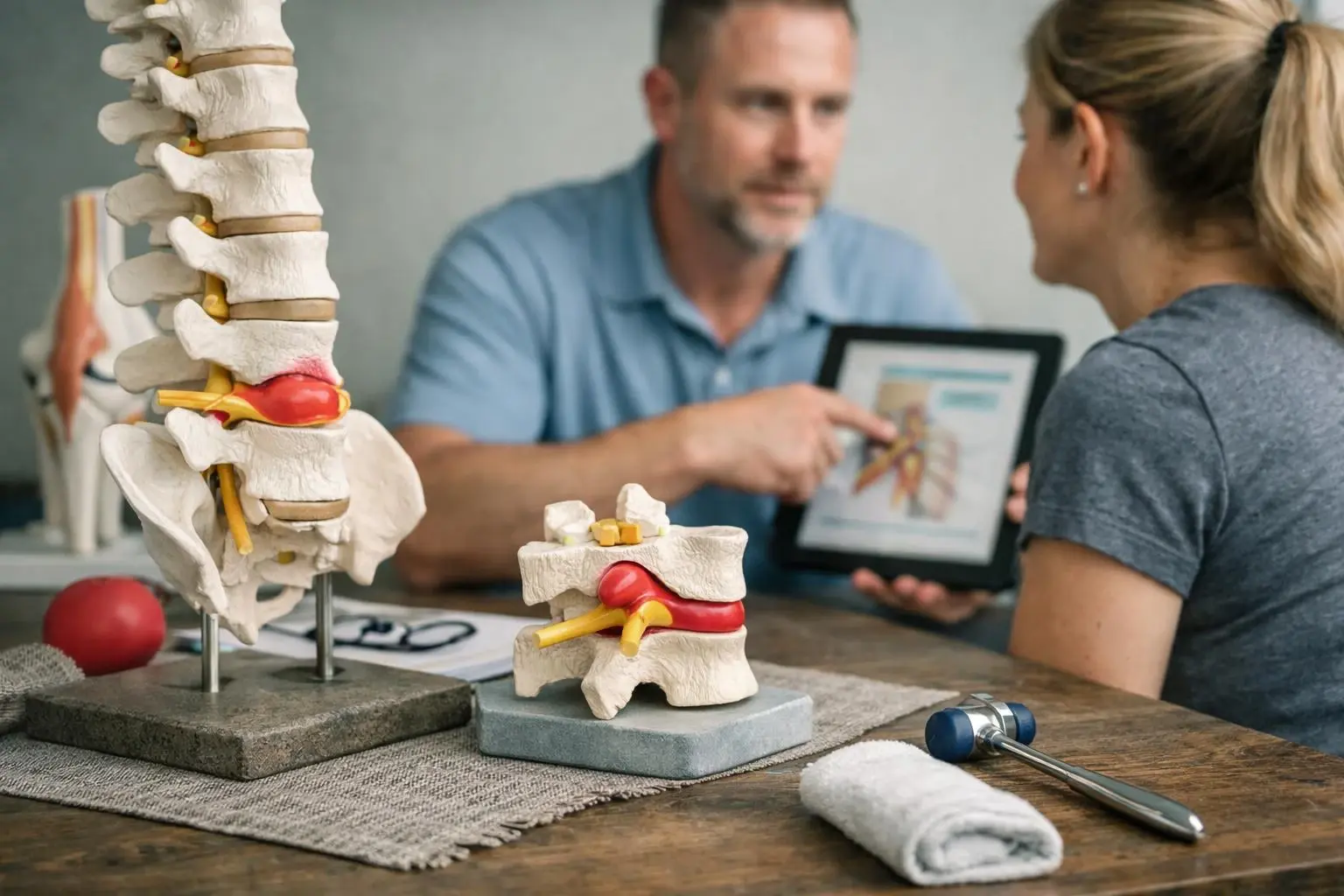
A herniated disc (a slipped disc) can press on nerves. So can bone spurs (extra bone growth).
Nerves in arms or legs can get squeezed too. Swollen muscles or tendons can press them.
Typing or using tools can also squeeze nerves. This happens if you do it over and over.
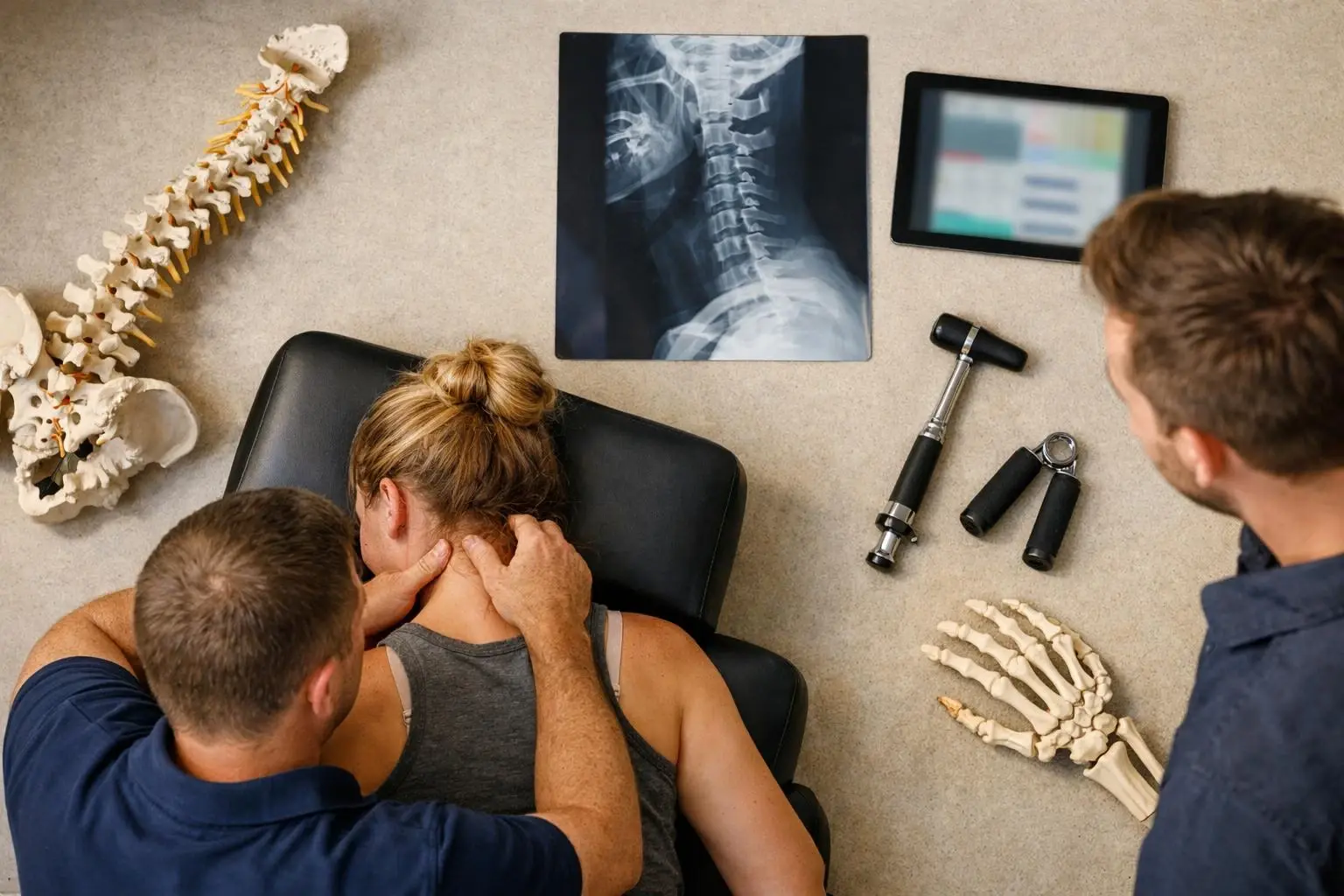
Doctors check for squeezed nerves. They ask about your pain. They do tests too.
X-rays, MRIs. Or nerve tests help them see. These show where the problem is.
An MRI can show a slipped disc. A nerve test checks how signals move.
Why Nerve Compression Matters?
Squeezed nerves make life hard. Pain or numbness can stop you from doing things.
You may not type, lift. Or walk well. If not treated, it can get worse.
It may cause long-term pain or hurt nerves forever. Then you might need surgery.
Early help can stop this. A chiropractor (nerve doctor) can help. So can therapy or changes at home.
Pain can make you feel bad. It can cause worry or sadness.
Fixing it early helps you feel better. It stops bigger problems later.
When Nerve Compression Matters Most?
Squeezed nerves matter most when they bother you. Numb hands make gripping hard.
Back pain can stop you from standing. If it gets worse, see a doctor.
Some jobs raise the risk. Office workers, builders. And athletes get squeezed nerves more.
Weak muscles or clumsiness are bad signs. Foot drop makes walking hard.
Foot drop means your foot drags. It happens when nerves in the leg get squeezed.
Fast help can stop lasting harm. A chiropractor can treat it.
Therapy, shots. Or surgery may help too. It depends on how bad it is.