Understanding Degenerative Disc Disease
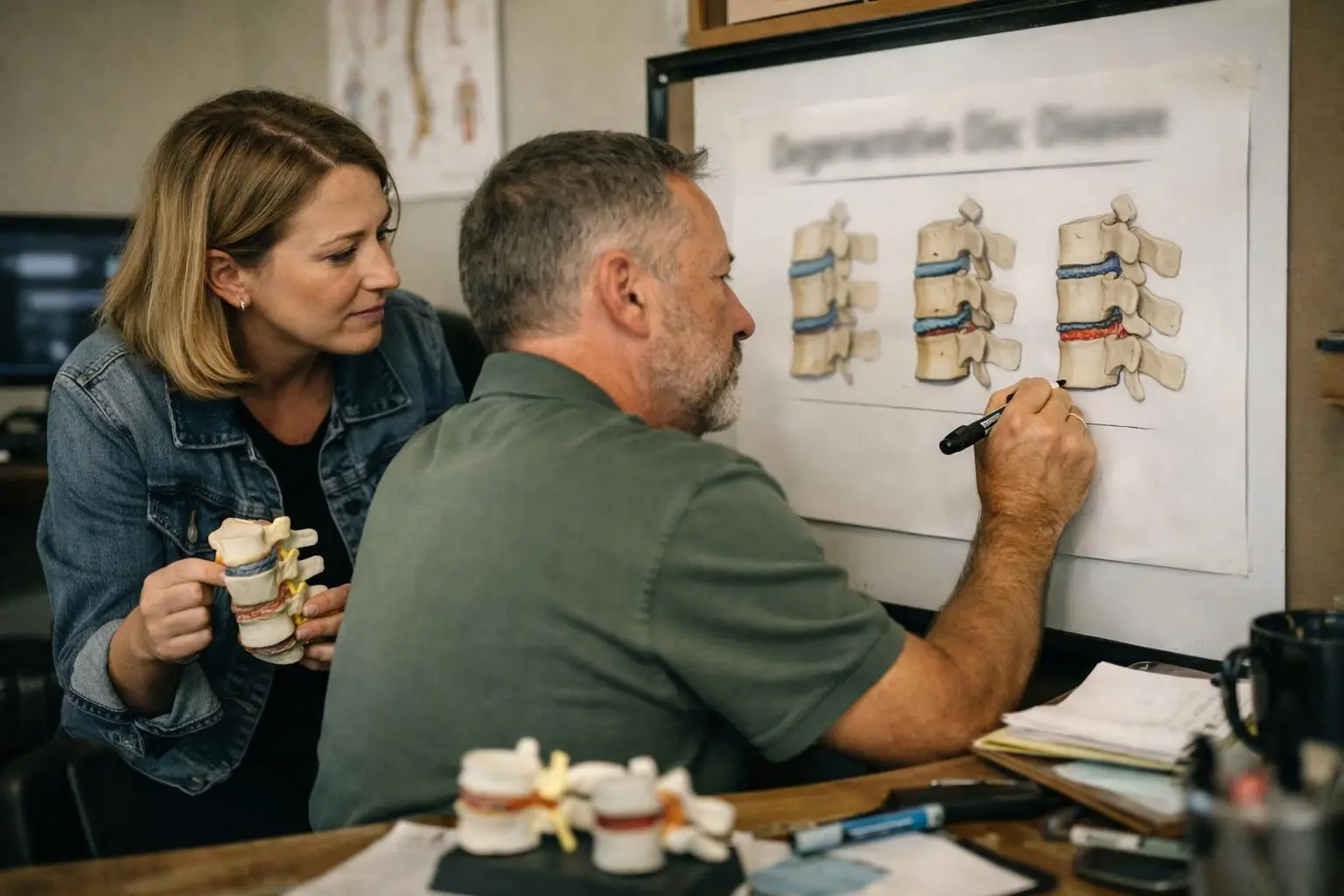
Degenerative Disc Disease refers to the gradual breakdown of the spinal discs, which are soft, rubbery pads located between the vertebrae (bones of the spine). These discs act as shock absorbers, allowing the spine to bend, twist. And carry weight without pain. Over time, these discs lose water content, become thinner. And lose their ability to cushion the vertebrae effectively. This process is a normal part of aging but can lead to pain, stiffness. And reduced mobility in some people.
Related glossary terms: Back Pain, Disc Herniation, Spinal Stenosis.
While the term "disease" suggests an illness, Degenerative Disc Disease is not contagious or caused by an infection. Instead, it describes the structural changes that occur in the spine as a result of wear and tear. These changes can begin as early as the teenage years but typically become noticeable in middle age or later. Factors like genetics, lifestyle. And previous injuries can speed up or slow down the process. But everyone experiences some degree of disc degeneration as they age.
How Degenerative Disc Disease Works?
The spinal discs are made up of two main parts: a tough outer layer called the annulus fibrosus and a soft, gel-like center called the nucleus pulposus. The outer layer provides strength and structure. While the inner gel absorbs shock and distributes pressure evenly across the spine. As people age, the discs lose water and proteins, causing the nucleus pulposus to shrink and the annulus fibrosus to weaken. This makes the discs less flexible and more prone to tears or cracks.
When the discs degenerate, the space between the vertebrae narrows, which can lead to several problems. The vertebrae may rub against each other, causing bone spurs (small bony growths) to form. These spurs can press on nerves, leading to pain, numbness. Or weakness in the back, neck, arms. Or legs. And the degenerated discs themselves can become a source of pain if they bulge or herniate, pressing on nearby nerves. The body may also respond to the instability by tightening muscles, which can cause muscle spasms and further discomfort.
- Pain: Often felt in the lower back or neck, but can radiate to the arms, legs, or buttocks.
- Stiffness: Reduced flexibility, making it harder to bend, twist, or stand for long periods.
- Nerve irritation: Compression of nerves can cause tingling, numbness, or weakness in the limbs.
- Activity-related pain: Pain may worsen with sitting, lifting, or bending, and improve with walking or changing positions.
Why Degenerative Disc Disease Matters?

Degenerative Disc Disease matters because it can significantly impact a person’s quality of life. Chronic pain and stiffness can make it difficult to perform daily activities, such as sitting at a desk, driving. Or even sleeping comfortably. Over time, the condition can lead to reduced mobility, making it harder to stay active or participate in hobbies and social activities. In some cases, nerve compression can cause more serious issues, such as sciatica (pain that radiates down the leg) or loss of bladder or bowel control. Though these are less common.
Understanding Degenerative Disc Disease is also important because it helps people make informed decisions about their health. While the condition can't be reversed, Expect ways to manage symptoms and slow its progression. Lifestyle changes, such as maintaining a healthy weight, staying active. And practicing good posture, can reduce stress on the spine. Physical therapy, chiropractic care. And pain management techniques can also help improve mobility and reduce discomfort. In severe cases, surgery may be an option. But it's typically considered only after other treatments have failed.
When Degenerative Disc Disease Matters Most?
Degenerative Disc Disease becomes particularly important in certain situations. For example, people who experience sudden or severe pain, numbness. Or weakness in their back, neck. Or limbs should seek medical attention to rule out serious complications like a herniated disc or spinal stenosis. The condition also matters most for individuals whose jobs or daily routines involve repetitive movements, heavy lifting. Or prolonged sitting, as these activities can accelerate disc degeneration and worsen symptoms.
And Degenerative Disc Disease can become a concern for older adults who want to maintain an active lifestyle. As people age, the risk of falls and injuries increases. And a weakened spine can make recovery more difficult. Managing the condition early can help prevent further damage and improve overall spinal health. Finally, the condition may be relevant for individuals considering surgery or other invasive treatments, as understanding the risks and benefits is crucial for making informed decisions.
- Sudden or severe pain: Could indicate a herniated disc or nerve compression requiring medical attention.
- Job-related stress: Repetitive movements or heavy lifting can worsen symptoms over time.
- Aging and activity levels: Older adults may need to adjust activities to prevent further damage.
- Surgical decisions: Understanding the condition helps weigh the risks and benefits of invasive treatments.