Jaw Pain and Clicking: A TMJ Symptom Checklist
TMJ symptoms can involve the jaw joint, jaw muscles, or surrounding tissues; seek care for persistent pain, worsening movement limits, injury-related symptoms, or red flags, and Arrowhead Clinic Chiropractor Newnan evaluates TMJ concerns through its TMJ Treatment service.
Get a Free EstimateWhat Are Common TMJ Symptoms?
Common TMJ symptoms include jaw pain, clicking or popping, stiffness, limited movement, tenderness, and discomfort while chewing or yawning.
The temporomandibular joint connects the jawbone to the skull and helps control jaw movement. Irritation in the joint, muscle tension, or strain in nearby tissues can cause facial pain, a clicking jaw, or a popping jaw.
Jaw stiffness may make it harder to open the mouth fully. Some people also notice a headache, ear-area discomfort, or pain when chewing and yawning.
Use This TMJ Symptom Checklist Before Seeking Care
A symptom checklist helps you describe when jaw symptoms begin, what makes them worse, and how they affect daily activities.
Record the following details before your visit:
What the Checklist Can Reveal About Your Jaw Symptoms
A symptom pattern can show whether jaw discomfort is linked with movement, muscle tenderness, joint sounds, restricted opening, or a recent injury.
Jaw-joint symptoms may be more noticeable during opening and closing, while masticatory muscle tension may cause tenderness around the cheeks, temples, or jaw muscles. Bite changes can also affect how the jaw moves and how the teeth meet.
We use these details to understand jaw function and decide whether a chiropractic evaluation fits your needs or whether another type of evaluation should be included.
Before Your TMJ Evaluation
Before a TMJ evaluation, prepare a clear symptom history so we can connect your complaints with jaw movement and daily activities.
Bring or consider the following information:
How We Assess Jaw Pain and Clicking
Arrowhead Clinic Chiropractor Newnan assesses jaw symptoms by reviewing the history and checking jaw movement, tenderness, joint sounds, and related musculoskeletal factors.
Our team observes how the jaw opens, closes, and moves from side to side. We also check the jaw muscles and the temporomandibular joint for tenderness or changes in motion.
Because the jaw, neck, and posture can influence one another, we consider related neck and posture findings during the evaluation. Our assessment helps us determine whether TMJ Treatment is appropriate and whether referral considerations are needed.
During Your TMJ Evaluation
A TMJ evaluation combines symptom discussion with a focused examination of jaw function and related areas.
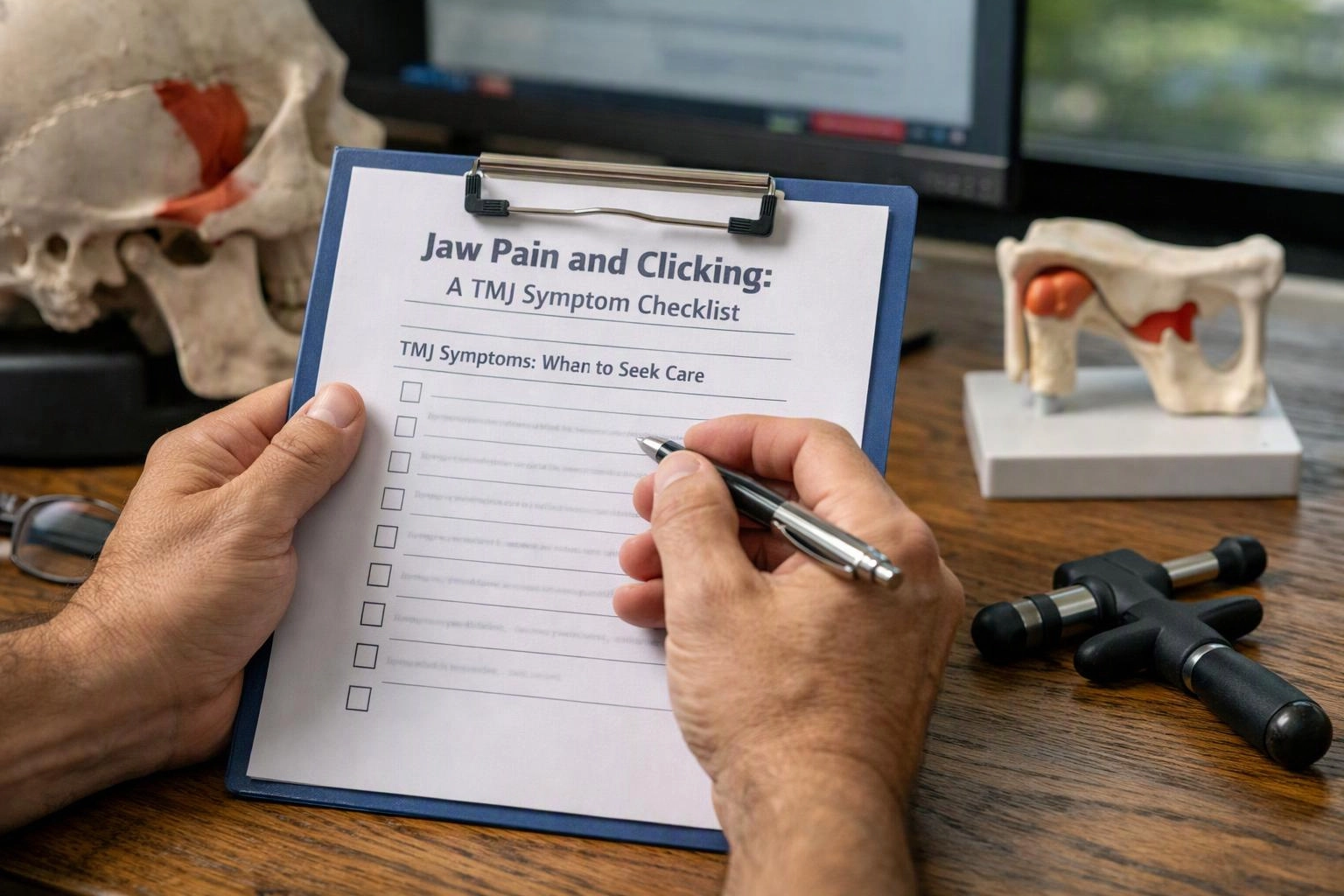
Our evaluation commonly includes:
When Should You Seek Care for Jaw Clicking and Pain?
Seek care for jaw clicking with persistent or worsening pain, restricted or locked movement, symptoms after an injury, or signs of infection or airway trouble.
Prompt evaluation is important when jaw symptoms interfere with eating, speaking, or opening the mouth. We also want you to recognize symptoms that may need urgent medical attention.
Jaw Symptoms After a Car Accident or Other Injury
Yes, jaw symptoms can occur after a car accident because impact can affect the jaw, facial structures, neck, or surrounding muscles.
Whiplash may strain the neck and alter muscle tension around the jaw. Jaw trauma or a facial injury may also cause pain, clicking, restricted movement, or bite changes.
Concussion symptoms require medical attention, especially when they follow an impact to the head or face. We review injury-related jaw and neck symptoms and help determine whether additional care is appropriate.
After Your TMJ Evaluation
After your TMJ evaluation, our team explains the findings and outlines the next steps that match your symptoms and jaw function.
Use the following checklist after the visit:
How to Decide What to Do Next
The appropriate next step depends on symptom severity, injury history, jaw function, and signs that require dental or medical evaluation.
A chiropractic evaluation may help assess jaw muscles, movement, posture, and related neck factors. A dental evaluation may be needed for tooth, bite, or dental causes of jaw pain.
Medical evaluation is important for swelling, fever, difficulty swallowing, difficulty breathing, or concussion symptoms. Urgent care is appropriate when symptoms are severe, rapidly worsening, or linked with serious injury.
What Questions Should You Ask About TMJ Symptoms?
These questions help connect specific jaw symptoms with the type of evaluation that may be useful.
Bring the answers to your visit so we can review the pattern with you.
| Question | Why It Matters |
|---|---|
| Where does the jaw pain occur? | Location can help separate joint, muscle, dental, and surrounding tissue concerns. |
| When does jaw clicking happen? | Timing shows whether the sound is linked with opening, closing, chewing, or another movement. |
| Does chewing or yawning cause pain? | Movement-related pain can point to restricted motion or irritated muscles and joint tissues. |
| Has the jaw locked? | Locking can signal a meaningful change in jaw function that deserves evaluation. |
| Did symptoms follow an injury? | Injury-related symptoms may involve the jaw, face, neck, or surrounding muscles. |
Start With a TMJ Symptom Review
Arrowhead Clinic Chiropractor Newnan provides Free Consultations to discuss TMJ symptoms and determine whether TMJ Treatment is an appropriate next step.
We review your symptom history, jaw movement, muscle tenderness, and related neck factors. Contact us through the contact page to arrange a symptom review.
Questions About Jaw Pain and Clicking
Can TMJ cause ear pain or a feeling of fullness?
Yes, TMJ symptoms can cause ear-area discomfort or a feeling of fullness near the jaw joint. Arrowhead Clinic Chiropractor Newnan reviews these symptoms with jaw movement and related muscle findings.
Can stress make jaw clicking and clenching worse?
Yes, stress can increase clenching and muscle tension, which may make jaw discomfort or clicking more noticeable. We assess muscle tenderness and jaw habits as part of the evaluation.
Should I see a dentist or chiropractor for TMJ symptoms?
The right choice depends on the symptoms, injury history, jaw function, and possible dental or medical concerns. Our chiropractic evaluation focuses on jaw movement, muscles, posture, and related neck factors, while dental concerns may require dental evaluation.
Can TMJ symptoms happen without jaw clicking?
Yes, TMJ symptoms can include pain, stiffness, muscle tenderness, limited jaw opening, headache, or ear-area discomfort without clicking. We assess the full symptom pattern rather than relying on joint sounds alone.