Work-Related Back or Neck Pain: Symptoms to Track
Work-related back and neck pain symptoms to track include pain location, intensity, movement limits, numbness, weakness, stiffness, work tasks, posture, and symptom changes; Arrowhead Clinic Chiropractor Newnan uses this information to understand your condition and plan appropriate Work Injury Treatment.
Get a Free EstimateWhat Should You Track When Work Causes Back or Neck Pain?
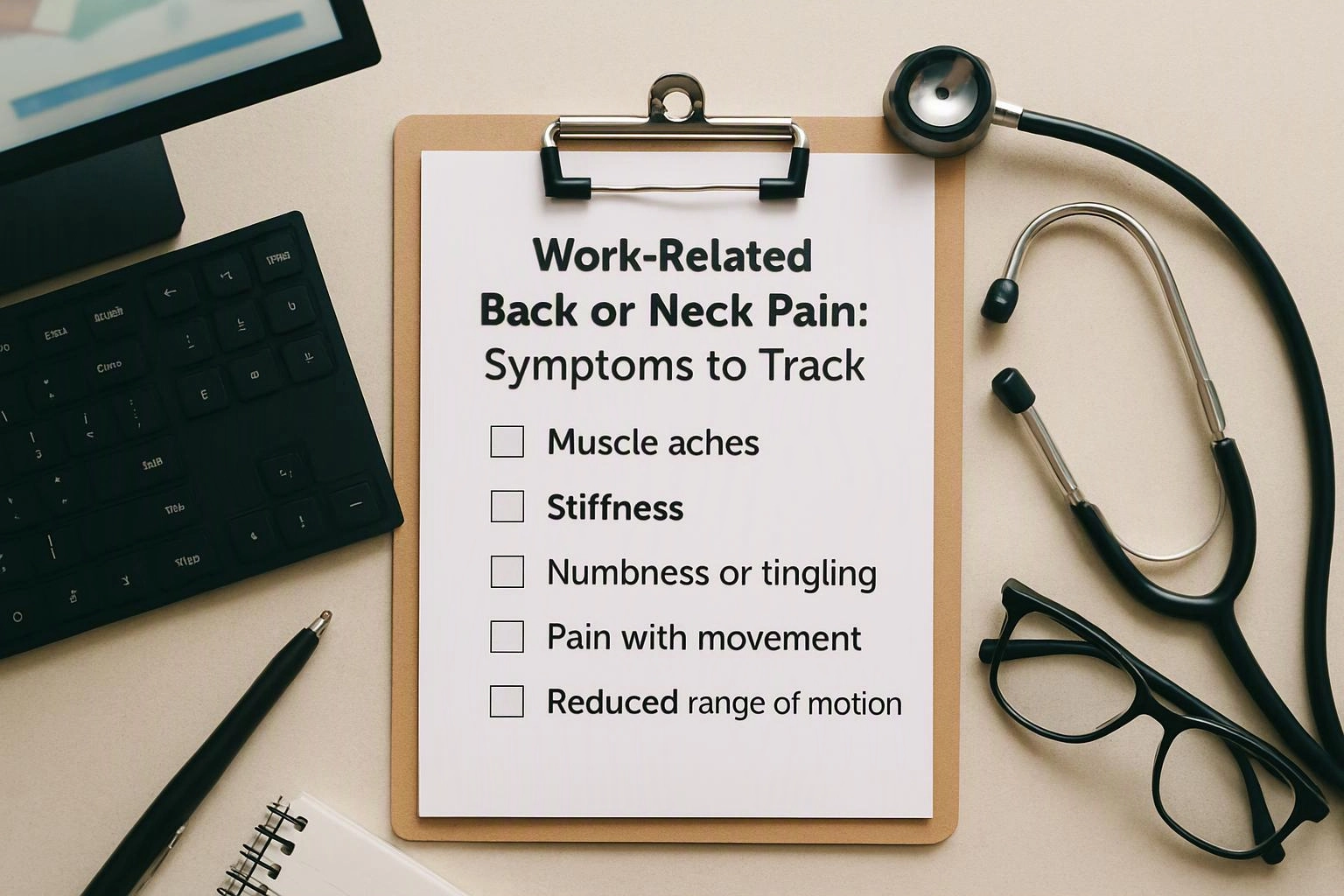
Work-related back pain and work-related neck pain are easier to evaluate when your symptom diary connects each change to a work activity. A work-related back or neck pain checklist should record where symptoms occur, what they feel like, which activities affect them, and whether they are changing.
Note whether pain stays in one area or travels into an arm or leg. Also record stiffness, numbness, tingling, weakness, range of motion, and any functional limitation that affects work or daily tasks. This symptom tracking creates a clearer pain pattern for a work injury evaluation.
You can use a paper symptom log, a phone note, or a pain journal. Include the task, your work posture, when symptoms started, and what helped them settle.
Before Work: Record Your Starting Symptoms
Baseline symptoms show how your back, neck, and movement feel before work activity begins. Record these details before the first task so later changes are easier to identify.
A consistent starting note helps separate symptoms that were present before work from symptoms that develop during a job task. Use the same simple terms each time so your records remain easy to review.
Your starting record does not need medical terms. Clear descriptions of what you feel and what you cannot do give our team useful information during a chiropractic evaluation.
Do not force a movement to test your range of motion. Record only movements that feel safe and comfortable.
Which Symptoms Need Prompt Medical Attention?
Back or neck pain needs prompt medical attention when it includes progressive weakness, loss of coordination, loss of bladder or bowel control, or severe worsening symptoms.
These red flags can signal a serious problem that needs timely medical assessment. Stop tracking the symptom as a routine work pattern and seek appropriate medical care when one of these warning signs appears.
New numbness, tingling, or radiating pain also deserves attention when it is spreading or paired with weakness. Our team can help assess work-related symptoms, but urgent warning signs require prompt medical care.
Keep a brief record of when the warning sign began and what happened before it. Do not delay care while waiting to complete a symptom checklist.
During Work: Track Tasks, Posture, and Symptom Changes
Work activities can reveal the pain triggers behind a work injury. Record the task, your position, the movement involved, and the point when symptoms changed.
Detailed notes help us connect a symptom to prolonged sitting, repetitive motion, lifting, bending, reaching, or poor work posture. Use one entry for each meaningful change instead of trying to remember the full day later.
Our team uses task-linked details to understand how the spine, back muscles, joints, and nerves may be responding to work demands. These notes can also support clearer workplace communication about functional limitations.
Describe the task in plain language and avoid guessing at the cause. The timing and movement details are more useful than trying to diagnose yourself.
How Do Sitting and Repetitive Work Affect Back or Neck Pain?
Yes, prolonged sitting and repetitive work can aggravate back or neck pain by keeping muscles and joints under sustained or repeated stress.
Prolonged sitting can keep the spine in one position and increase muscle fatigue. Repetitive work can place repeated demands on the same muscles, joints, and nerves, which may contribute to muscle strain, joint irritation, or a movement restriction.
Ergonomics focuses on how your workstation, tools, body position, and work activity fit together. We review these factors alongside your symptom pattern instead of treating posture as the only possible cause.
Record whether symptoms improve after changing position, taking a brief movement break, or reducing a repeated task. This information helps connect the work activity to the physical response.
Back and Neck Symptom Tracking Reference
A symptom reference table helps you capture the same information each day. Use the row that best matches your experience and add the work task or timing beside it.
Consistent wording makes symptom progression easier to recognize. Bring the completed notes to your evaluation so our team can compare symptoms with movement and work demands.
| What to track | What to write | Why it helps |
|---|---|---|
| Pain location | Low back, upper back, neck, arm, or leg | Shows where symptoms begin and whether they spread |
| Pain quality | Aching, sharp, burning, tight, sore, or electric | Clarifies how the symptom feels |
| Pain intensity | Use your own consistent low, moderate, or high description | Shows whether symptoms change over time |
| Numbness or tingling | Location, timing, spread, and changes during work | Identifies possible nerve symptoms that need review |
| Weakness | Tasks that became harder or less controlled | Shows changes in function |
| Mobility | Turning, bending, standing, walking, or reaching limits | Describes range of motion and movement restriction |
| Work trigger | Sitting, lifting, bending, reaching, or repetitive work | Connects symptoms to a work activity |
| Relieving activity | Position change, walking, rest, or reduced activity | Shows what changes the pain pattern |
Our team considers the full pattern rather than one symptom in isolation. A symptom that seems mild may still matter when it consistently follows the same task or limits normal movement.
After Work: Review What Changed
Post-work notes show whether symptoms settle, remain steady, or continue to build after the work activity ends. Review your symptoms while the day’s tasks are still easy to remember.
Delayed pain can be important because symptoms may appear after repeated loading or sustained posture. Record the change without assuming that delayed symptoms are unrelated to work.
A recovery pattern can help show whether the problem is linked to one task, the full workday, or activities outside work. We use this timeline when considering appropriate back pain treatment or neck pain treatment.
Keep your notes factual and brief. A clear record of change is more useful than a long description that leaves out the timing.
When Should You Seek Care for Pain That Keeps Returning at Work?
Seek care when back or neck pain keeps returning, limits work or daily activities, spreads into an arm or leg, or continues to worsen despite reducing the triggering activity.
Recurring pain can point to an unresolved work-related injury, especially when the same work task brings it back. A work-related injury evaluation can review the pain recurrence, functional limitation, movement restriction, and possible nerve symptoms.
Our team performs a chiropractic assessment that considers your symptom history and work activity. You can also review Back Pain Warning Signs: When to Seek an Evaluation if you are unsure whether a change needs prompt attention.
Bring your symptom checklist to the visit and explain which tasks trigger symptoms. This gives us a stronger basis for deciding what evaluation and care may fit your condition.
What Our Team Checks During Work Injury Treatment
Work Injury Treatment begins with a review of your symptom history, work triggers, movement limitations, and physical findings. Arrowhead Clinic Chiropractor Newnan uses this information to guide back pain treatment or neck pain treatment.
We ask how the injury happened, which work tasks change your symptoms, and whether pain travels into your arms or legs. We also review range of motion, strength, coordination, posture, and functional limitations.
Our team uses the findings to explain the likely musculoskeletal pattern and discuss appropriate chiropractic care. We connect the evaluation to your daily demands so the plan addresses both symptoms and movement limits.
Free Consultations are available for people who want to discuss a work-related back or neck pain concern. Learn more about our Work Injury Treatment approach before contacting us.
After Evaluation: Keep Your Checklist Useful
Your symptom checklist remains useful after evaluation because symptoms and work demands can change. Continue recording meaningful changes so our team can compare your response with your activity.
Use the same terms when possible and note questions as they arise. Good documentation supports clearer follow-up conversations and workplace communication.
A useful checklist shows the connection between symptoms, work tasks, and function over time. Our team can use those details to keep the evaluation focused on your current needs.
If symptoms worsen or red flags appear, seek prompt medical attention instead of waiting for a routine follow-up.
Questions About Tracking Work-Related Back and Neck Pain
Can work-related back pain cause leg symptoms?
Yes, work-related back pain can cause radiating leg pain, numbness, tingling, or weakness when nerve symptoms are involved. Record where the symptom travels, which task preceded it, and whether it is worsening so Arrowhead Clinic Chiropractor Newnan can review the pattern during an evaluation.
Can work-related neck pain cause arm numbness or tingling?
Yes, work-related neck pain can occur with arm numbness or tingling when nerve symptoms are present. Note the arm or hand area involved, the work posture or task that preceded it, and any weakness or loss of coordination.
What should I write in a back or neck pain symptom diary?
A back or neck pain symptom diary should include pain location, pain quality, stiffness, range of motion, numbness, tingling, weakness, work tasks, posture, timing, and what changes the symptoms. Include both your starting symptoms and your post-work symptoms so the full pain pattern is clear.
How can I describe work activities that trigger back or neck pain?
Describe the work activity, your body position, the movement involved, when symptoms changed, and what happened after you stopped or changed position. Include prolonged sitting, repetitive work, lifting, bending, reaching, and work posture when those factors are part of the pattern.
Arrowhead Clinic Chiropractor Newnan reviews work-related back and neck pain symptoms, work triggers, and movement changes to help guide the next step. Request a Free Consultation through our contact page.
Related Resources
Paying for Chiropractic Care After a Car Accident: Coverage and Cost Questions
Compared ToWork Injury Chiropractic Care: What to Confirm Before Choosing a Clinic
Brand vs BrandChoosing a Chiropractor in Newnan: What to Compare Before Booking
Compared ToChiropractic Adjustment vs. Corrective Exercise for Back Pain