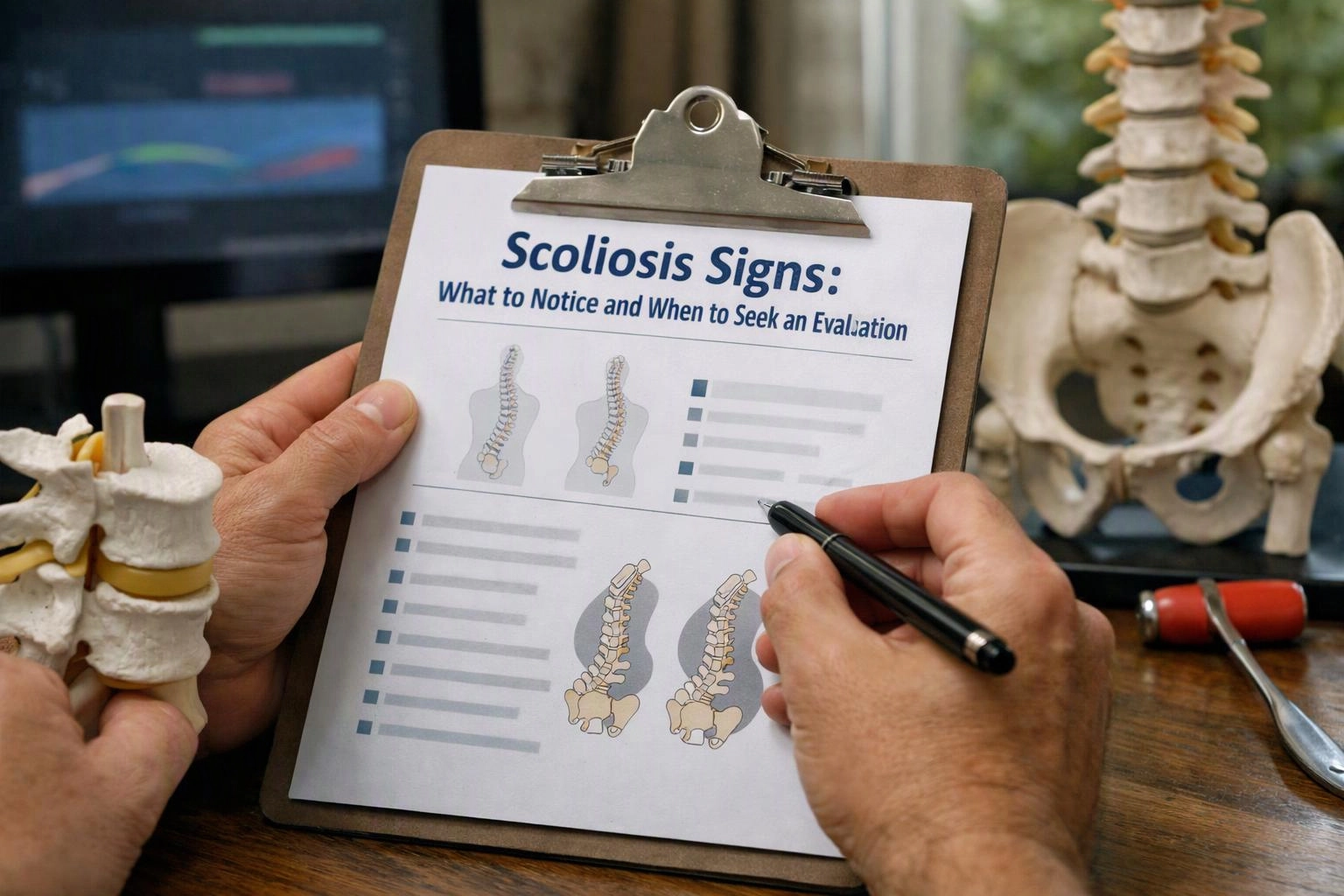
Scoliosis Signs: What to Notice and When to Seek an Evaluation
Scoliosis signs can include an uneven shoulder or waist, uneven hips, a visible spinal curve, or one side of the back becoming more prominent when bending. Arrowhead Clinic Chiropractor Newnan reviews posture and movement, explains when an evaluation is appropriate, and helps connect concerning findings with the right next step.
Get a Free EstimateWhat Are the Signs of Scoliosis?
Scoliosis signs can include visible asymmetry in the shoulders, shoulder blades, waist, hips, or the alignment of the spine. Scoliosis is a spinal condition involving a side-to-side curve that may also affect posture and body balance.
Some people notice a curved spine when standing, while others notice back asymmetry during movement or a forward-bending observation. Childhood scoliosis and adolescent scoliosis may be noticed by a parent, teacher, clinician, or the person themselves.
Visible Signs to Notice
Use This Scoliosis Signs Comparison Guide
A scoliosis signs table helps distinguish visible changes that deserve an evaluation from symptoms that may have other causes. Our team uses these observations as part of a broader clinical evaluation.
Visible asymmetry can relate to spinal curvature, muscle imbalance, or posture. Pain and movement changes also need context because they can occur with several musculoskeletal conditions.
| Finding | What it may suggest | Why evaluation matters |
|---|---|---|
| Visible signs | Uneven shoulders, shoulder blades, waist, hips, or a prominent curve | A clinician can assess whether the pattern is consistent with spinal curvature or another cause. |
| Movement-related signs | Changes during bending, walking, or turning | Movement assessment shows how posture and spinal alignment respond to motion. |
| Pain | Back pain, soreness, or fatigue | Pain can have causes that are separate from scoliosis. |
| Muscle imbalance | Different tension or strength from one side to the other | Our team checks whether muscle imbalance contributes to postural asymmetry. |
| Clinical evaluation | A structured review of symptoms, movement, and alignment | Findings help determine whether monitoring, care, imaging, or referral is appropriate. |
What Should You Check Before an Evaluation?
Before an evaluation, posture observation and symptom notes can help describe what changed and when it appears. Avoid trying to diagnose scoliosis from appearance alone.
What Happens During a Scoliosis Evaluation?
A scoliosis evaluation reviews health history and examines posture, spinal alignment, movement, and related symptoms to decide whether further medical assessment is needed.
Arrowhead Clinic Chiropractor Newnan begins with questions about symptoms, growth or injury history, and family history. We then observe posture, assess range of motion, review gait, and complete a neurological screening when symptoms call for it.
How Does an Evaluation Guide the Next Step?
Evaluation findings determine whether the person needs monitoring, conservative care, imaging, or referral to another medical clinician. A scoliosis screening does not replace medical diagnosis when symptoms are severe or neurological.
Our chiropractic assessment focuses on posture, movement, spinal alignment, and functional concerns. When findings suggest that imaging or medical referral is needed, we explain that next step clearly.
Care may include movement guidance and posture correction when those services fit the findings. Our Scoliosis Treatment approach is individualized and based on the evaluation.
What Should You Do After an Evaluation?
After an evaluation, follow the care plan that matches the findings and complete any recommended referral. The next step depends on whether the concern involves posture, movement, spinal curvature, pain, or neurological changes.
Which Scoliosis Warning Signs Need Prompt Medical Attention?
Prompt medical attention is appropriate for scoliosis concerns accompanied by severe or worsening pain, neurological changes, loss of bladder or bowel control, or breathing difficulty.
These warning signs need medical assessment because they may point to a serious condition beyond a routine posture concern.
Can Scoliosis Cause Back Pain?
Yes, scoliosis can be associated with back pain, but back pain alone does not establish scoliosis because several conditions can cause similar symptoms.
Spinal curvature can change how back muscles share work, which may contribute to muscle fatigue or muscle imbalance. Injury, joint irritation, or other conditions can also cause back pain, so the cause requires a clinical evaluation.
We review pain location, movement patterns, posture, and related symptoms to help separate possible pain causes from signs that need medical referral.
Who Should Evaluate Possible Scoliosis?
Arrowhead Clinic Chiropractor Newnan can begin a chiropractic evaluation, while a primary care clinician, pediatric clinician, orthopedic clinician, or spine clinician may provide medical assessment when needed.
Children and adolescents with a possible spinal curve should be evaluated in a way that considers growth, symptoms, and family history. Neurological symptoms or severe symptoms require medical assessment and may call for a medical referral.
We explain what our findings mean and help identify the appropriate next step without treating a visible asymmetry as a diagnosis.
How Arrowhead Clinic Chiropractor Newnan Assesses Posture and Scoliosis Concerns
Arrowhead Clinic Chiropractor Newnan assesses posture, movement, and spinal alignment and explains whether chiropractic care or medical referral is the appropriate next step.
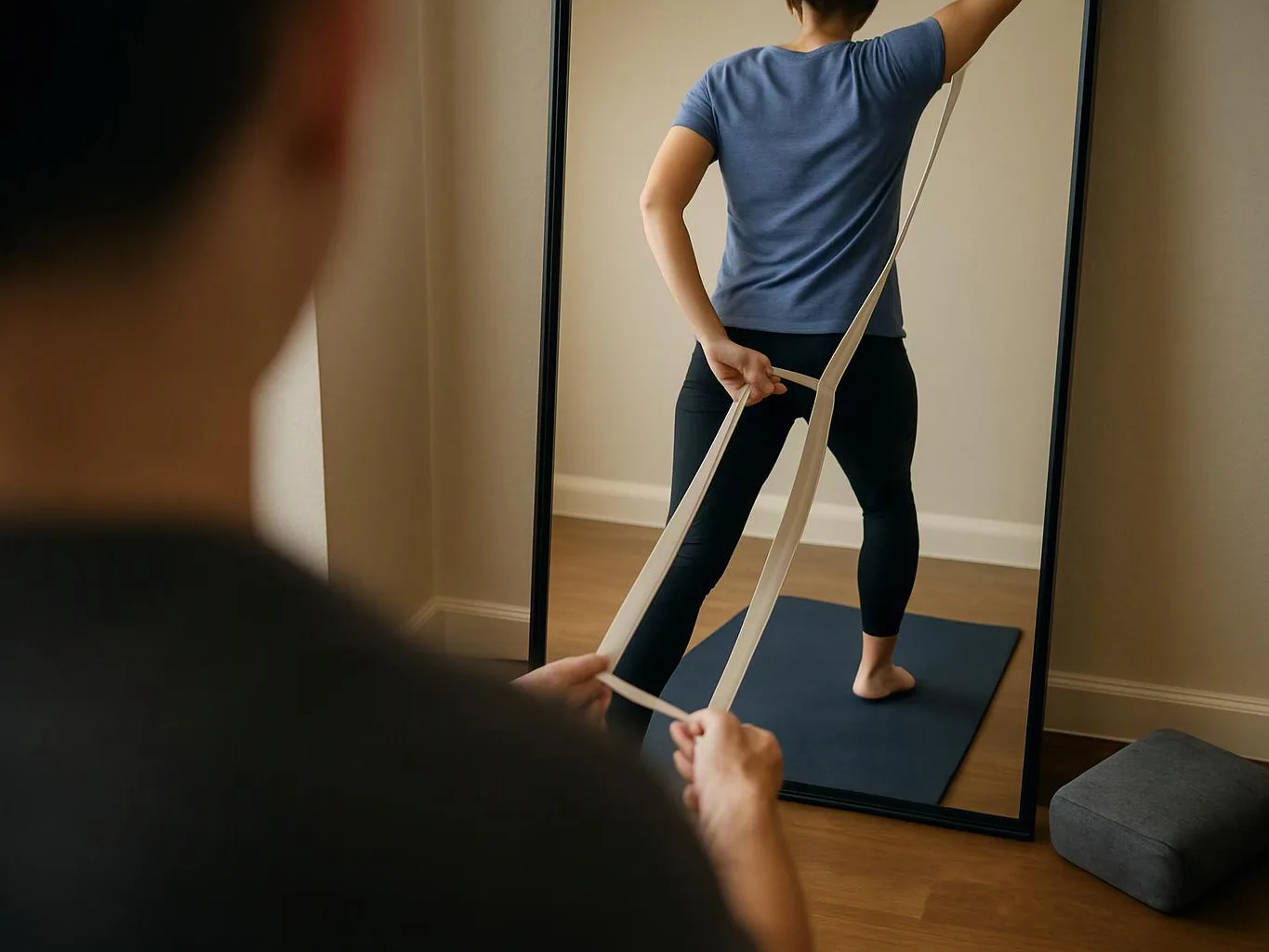
Our team looks at how the shoulders, shoulder blades, waist, hips, and spine relate during standing and movement. We also consider range of motion, gait, pain, muscle imbalance, and neurological symptoms.
When posture correction or scoliosis treatment is appropriate, we explain the care plan in plain language. We also offer Free Consultations for people who want to discuss their concerns before deciding on an evaluation.
Questions About Scoliosis Signs
Can scoliosis develop without causing pain?
Yes, scoliosis can develop without causing pain, especially when the main finding is visible asymmetry. Arrowhead Clinic Chiropractor Newnan reviews posture and movement so concerning changes are not judged by pain alone.
Can poor posture look like scoliosis?
Yes, poor posture can create an appearance that resembles scoliosis, but posture alone does not confirm a spinal curve. An evaluation compares alignment during standing and movement.
Can scoliosis signs change as a child grows?
Yes, scoliosis signs can change as a child grows, so new asymmetry or movement changes deserve attention. A clinician can compare findings over time and explain whether follow-up or medical assessment is appropriate.
Does finding an uneven shoulder always mean scoliosis?
No, an uneven shoulder does not always mean scoliosis. Posture, muscle imbalance, injury, and other alignment changes can create a similar appearance, so a clinical evaluation is needed for context.
When you notice possible scoliosis signs, our team can review your concerns, explain the findings, and help identify the right next step. Contact Arrowhead Clinic Chiropractor Newnan to arrange a Free Consultations discussion.
Get a Free Estimate