
What Is a Sacroiliac Joint?
A sacroiliac joint is the connection between the sacrum at the base of the spine and the ilium of the pelvis. The paired joints transfer forces between the upper body and legs. Strong ligaments provide stability, while small movements help the pelvis adapt during walking, standing, and changing positions.
Quick Facts About Sacroiliac Joint
Category
Pelvic joint
Used for
Load transfer and pelvic movement
Common confusion
Sciatic nerve pain
Also called
SI joint, sacroiliac articulation
Often discussed with
Back Pain Treatment
Key Takeaways About Sacroiliac Joint
- Each sacroiliac joint connects the sacrum with one side of the pelvis.
- The joint moves slightly while transferring load during everyday activities.
- Sacroiliac joint discomfort is not the same as sciatic nerve pain.
How Sacroiliac Joint Works
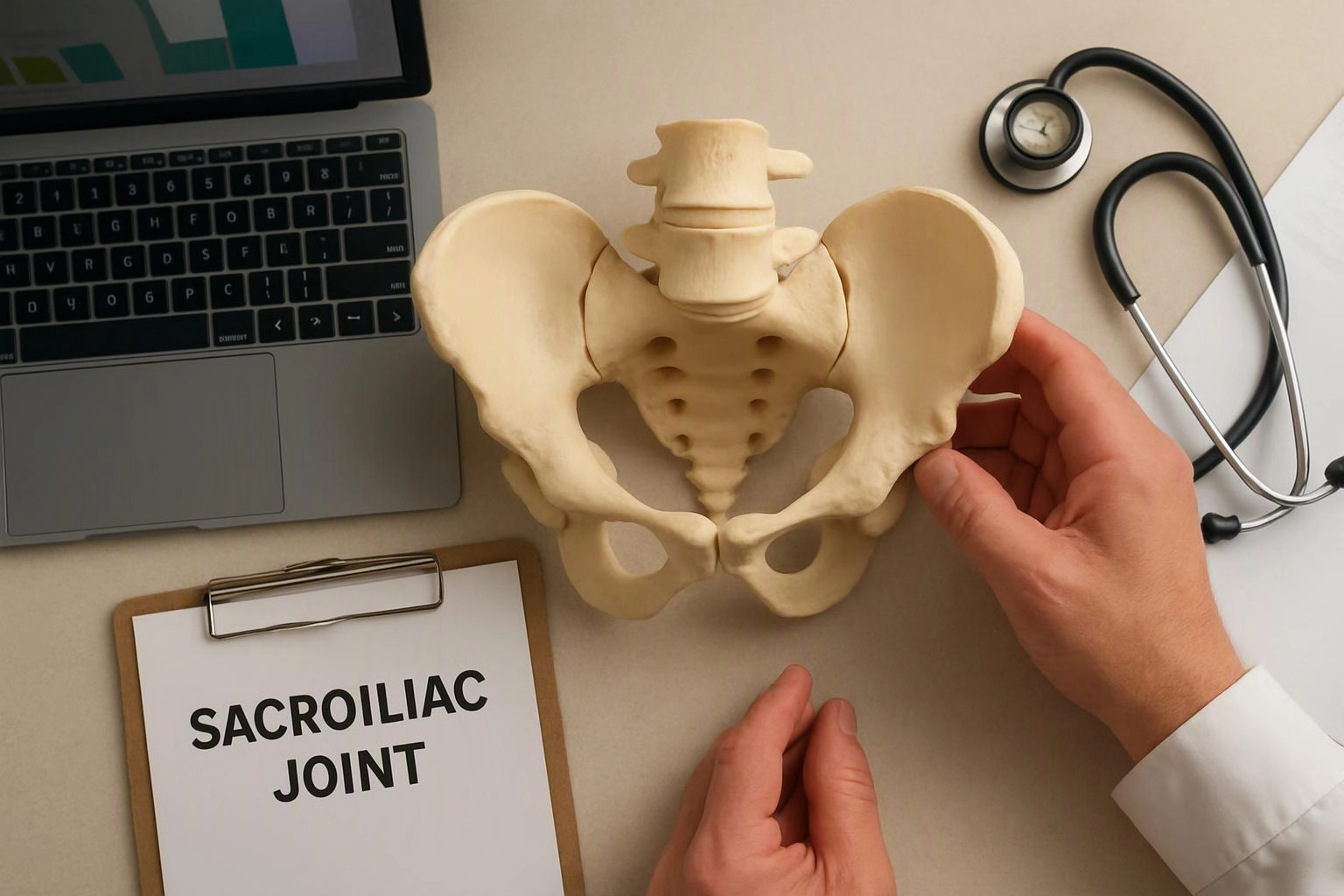
Sacroiliac joint function depends on a firm connection between the sacrum and the pelvic bones. Thick ligaments limit excessive motion, while the joint permits small adjustments as force moves from the spine into the legs. Walking, climbing, and shifting from sitting to standing all place changing demands on this area.
Related glossary terms: Lumbar Spine, Pelvic Girdle Pain, Joint Mobility.
The sacroiliac joint is assessed as part of the surrounding movement system. A clinician may consider pelvic motion, nearby muscle tension, posture, and the location of reported discomfort. Findings from the lumbar spine and hip joint can help show whether symptoms relate to the sacroiliac region or another structure. The joint itself is only one part of that assessment.
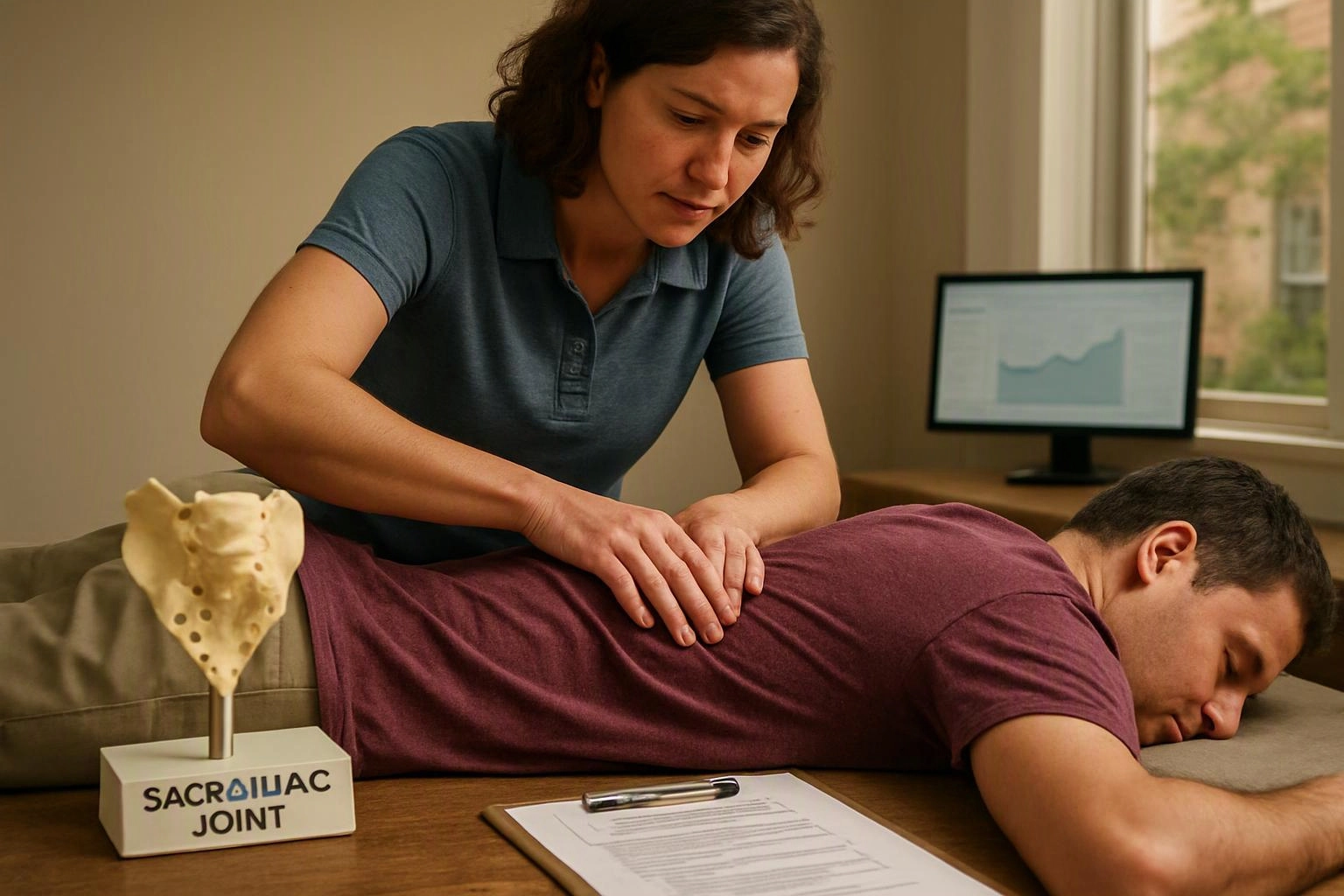
From the Arrowhead Clinic Chiropractor Newnan team
When we assess the sacroiliac joint during Back Pain Treatment, we consider how the pelvis, lumbar spine, hips, and nearby muscles move together. We also compare the reported pain pattern with examination findings. This approach helps us keep the joint in context instead of treating one structure as the sole explanation.
Sacroiliac Joint in Practice: A Real-World Example
A person may feel pain near one side of the lower back after lifting, turning, or standing for a long period. During Back Pain Treatment, the sacroiliac joint is considered alongside pelvic motion, hip function, and lumbar movement.
Related Services
Related Terms
Lumbar Spine
Lumbar Spine is the lower section of the spinal column between the rib-bearing back and the…
Pelvic Girdle Pain
Pelvic Girdle Pain is discomfort arising from the joints and supporting tissues around the pelvis. The…
Joint Mobility
Joint Mobility is the capacity of a joint to move freely through its available range while…
Sciatic Nerve
The sciatic nerve is the body’s largest peripheral nerve and a main pathway between the lower…
Arrowhead Clinic Chiropractor Newnan
Have Questions About Sacroiliac Joint?
Contact Arrowhead Clinic Chiropractor Newnan for practical guidance on Sacroiliac Joint and related chiropractor work in Newnan.