
What Is Pelvic Girdle Pain?
Pelvic Girdle Pain is discomfort arising from the joints and supporting tissues around the pelvis. The discomfort may affect the front, back, or sides of the pelvic region and can become more noticeable during walking, standing, turning in bed, or changing position. Pregnancy can change how pelvic load is distributed and may contribute.
Quick Facts About Pelvic Girdle Pain
Category
Musculoskeletal pain pattern
Used for
Describing pelvic-region discomfort
Common confusion
Often confused with sciatica
Also called
Pregnancy pelvic pain, Pregnancy-related pelvic girdle pain
Often discussed with
Prenatal Chiropractic Care
Key Takeaways About Pelvic Girdle Pain
- Pain may occur at the front, back, or sides of the pelvis.
- Walking, turning, and standing can change symptom patterns.
- Pelvic Girdle Pain is not the same as sciatica.
How Pelvic Girdle Pain Works
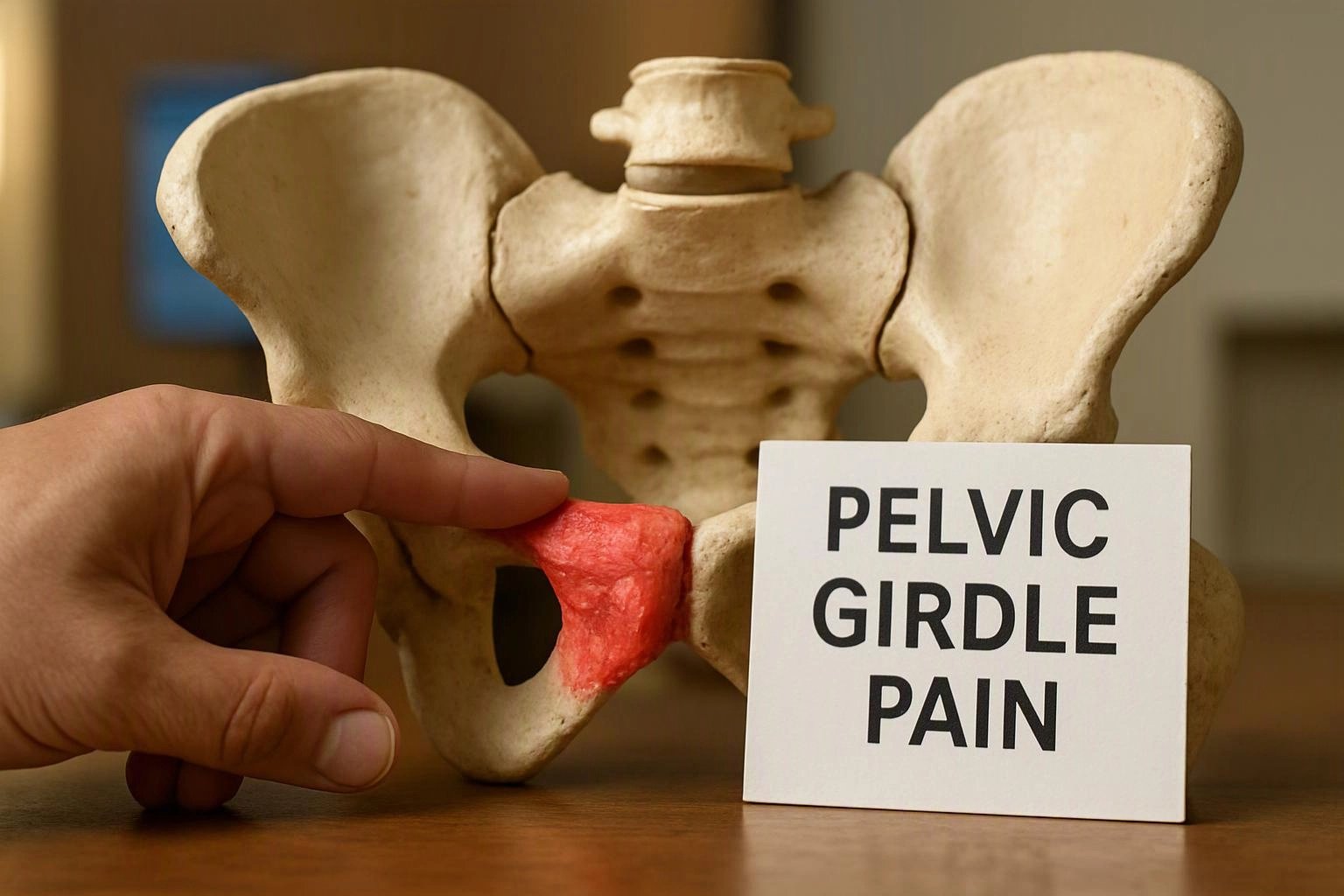
Pelvic Girdle Pain describes symptoms linked to movement or loading around the pelvic joints and nearby supporting tissues. The pelvis transfers force between the spine and legs, so symptoms may change when you walk, climb stairs, stand on one leg, or turn in bed. The front pelvic joint and the paired sacroiliac joints can be part of the pattern.
Related glossary terms: Sacroiliac Joint, Lumbar Spine, Joint Mobility.
Clinicians consider the location of discomfort, the movements that reproduce it, and related changes in hip or lower-back function. Pelvic Girdle Pain may occur with or without lower-back pain. The term describes a symptom pattern, not a single confirmed tissue injury. A careful assessment also separates pelvic symptoms from nerve-related pain that travels along the leg.
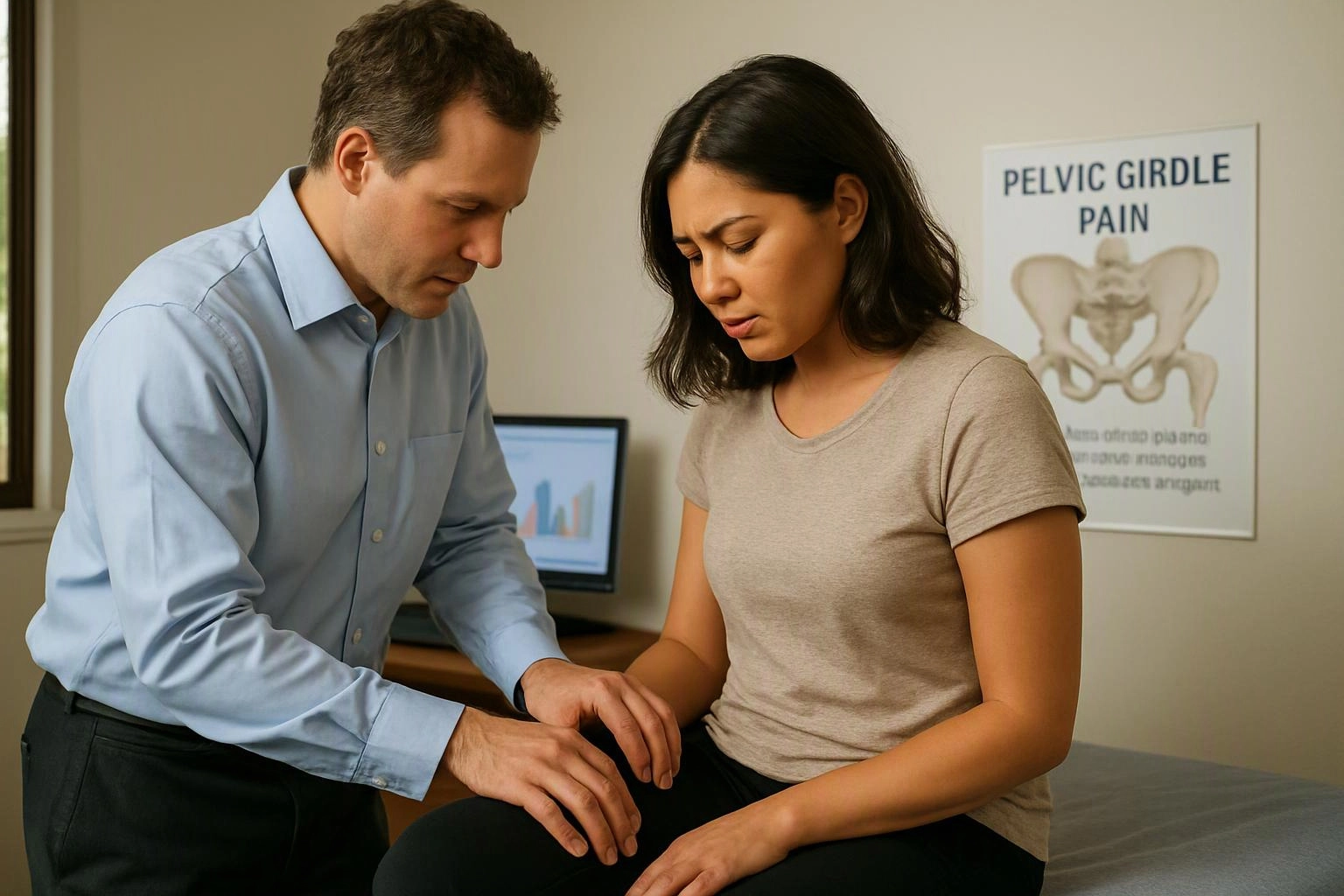
From the Arrowhead Clinic Chiropractor Newnan team
When we assess Pelvic Girdle Pain, we review the symptom history and observe movements that load the pelvis. We also consider the hips, lower back, and sacroiliac region so our care plan reflects the person’s full movement pattern. Prenatal care calls for particular attention to position and comfort.
Pelvic Girdle Pain in Practice: A Real-World Example
A pregnant person may feel pain near the back of the pelvis when turning in bed or walking after sitting. The discomfort may ease or intensify with different movements, which helps guide the clinical assessment.
Related Services
Related Terms
Sacroiliac Joint
A sacroiliac joint is the connection between the sacrum at the base of the spine and…
Lumbar Spine
Lumbar Spine is the lower section of the spinal column between the rib-bearing back and the…
Joint Mobility
Joint Mobility is the capacity of a joint to move freely through its available range while…
Round Ligament Pain
Round Ligament Pain is a sharp, pulling, or aching discomfort linked to stretching of the round…
Arrowhead Clinic Chiropractor Newnan
Have Questions About Pelvic Girdle Pain?
Contact Arrowhead Clinic Chiropractor Newnan for practical guidance on Pelvic Girdle Pain and related chiropractor work in Newnan.