Glossary

What is Flexion-Distraction?

Flexion-Distraction is a gentle, non-surgical chiropractic technique used to treat spinal conditions like disc herniation, sciatica. And stenosis. It involves a specialized table that rhythmically stretches and flexes the spine to reduce pressure on spinal nerves, improve disc hydration. And restore motion. The method is evidence-based and widely used for patients who need low-force care.

Reviewed by ChiropractorNewnan.linkSources reviewed: Cox Technic Official Website, Journal of Manipulative and Physiological Therapeutics

Quick Facts About Flexion-Distraction

Category

Chiropractic technique

Used for

Disc herniation, sciatica, spinal stenosis, back pain

Common confusion

Often mistaken for general spinal traction or decompression

Also called

Cox Technic, Flexion Distraction Technique

Often discussed with

Chiropractic Consultation and Diagnosis, Personal Injury Chiropractic Care

Key Takeaways About Flexion-Distraction

Understanding Flexion-Distraction
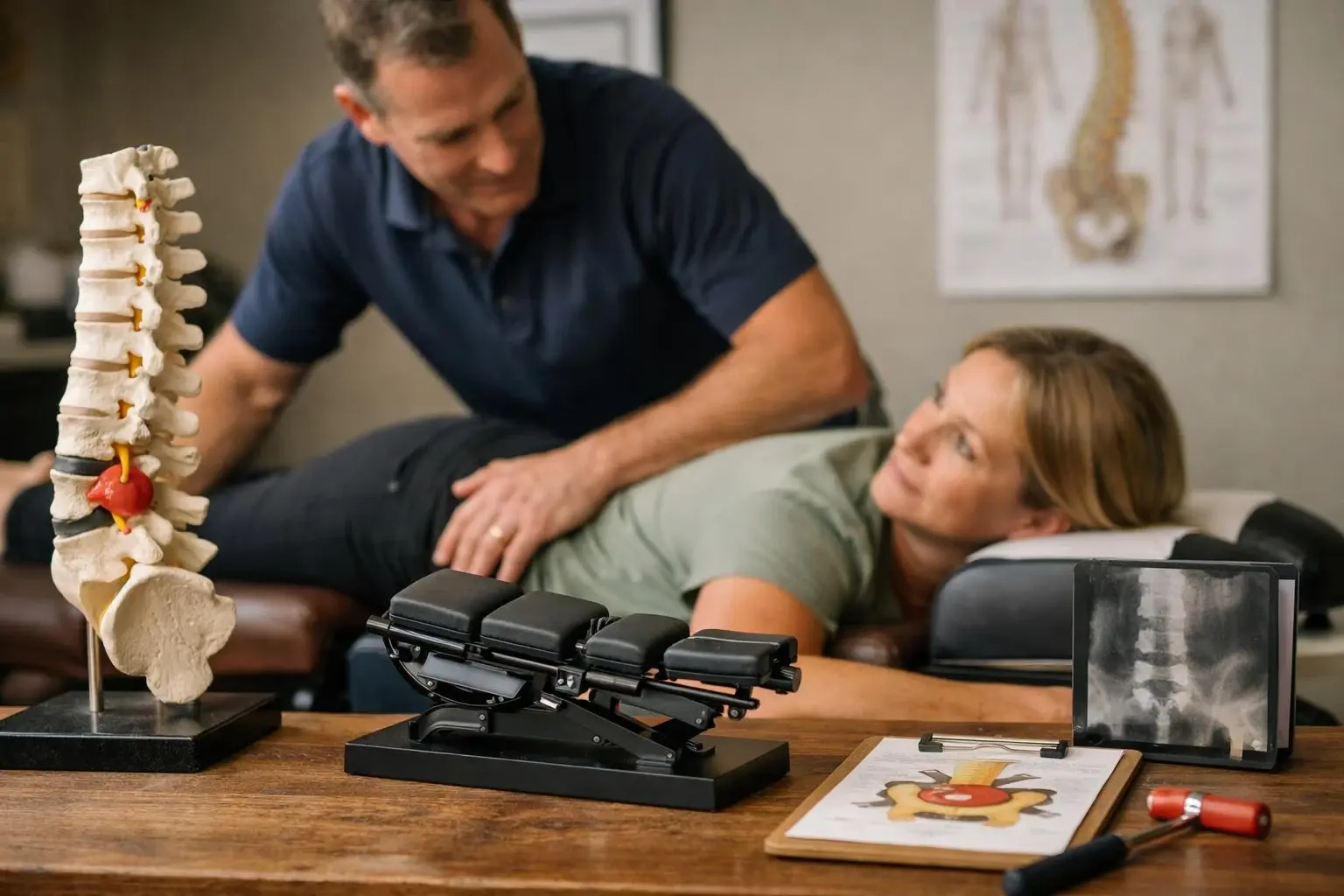
Flexion-Distraction in Chiropractor: Flexion-Distraction is a gentle, non-surgical chiropractic technique used to treat sp...

Flexion-Distraction is a way to treat back problems. It helps with pain, numbness. Or weakness.

Related glossary terms: Disc Herniation, Spinal Decompression, Chiropractic Adjustment.

Most back treatments use quick pushes. This one uses slow, gentle moves instead.

A special table helps the chiropractor stretch your spine. They move one part at a time.

The goal is to make space in your back. This eases pressure on nerves. It helps hurt discs heal.

Dr. James Cox made this method. Some call it the Cox Technic.

It works well for disc problems. This includes herniated (bulging) or worn-out discs.

It also helps with spinal stenosis (narrow back) or sciatica (leg pain).

It's gentle. So older adults like it. People with weak bones can use it too.

Those healing from surgery can try it. They can't handle rough treatments.

Studies show it helps discs hold water. This makes your back move better.

It also cuts pain from pinched nerves.

How Flexion-Distraction Works?

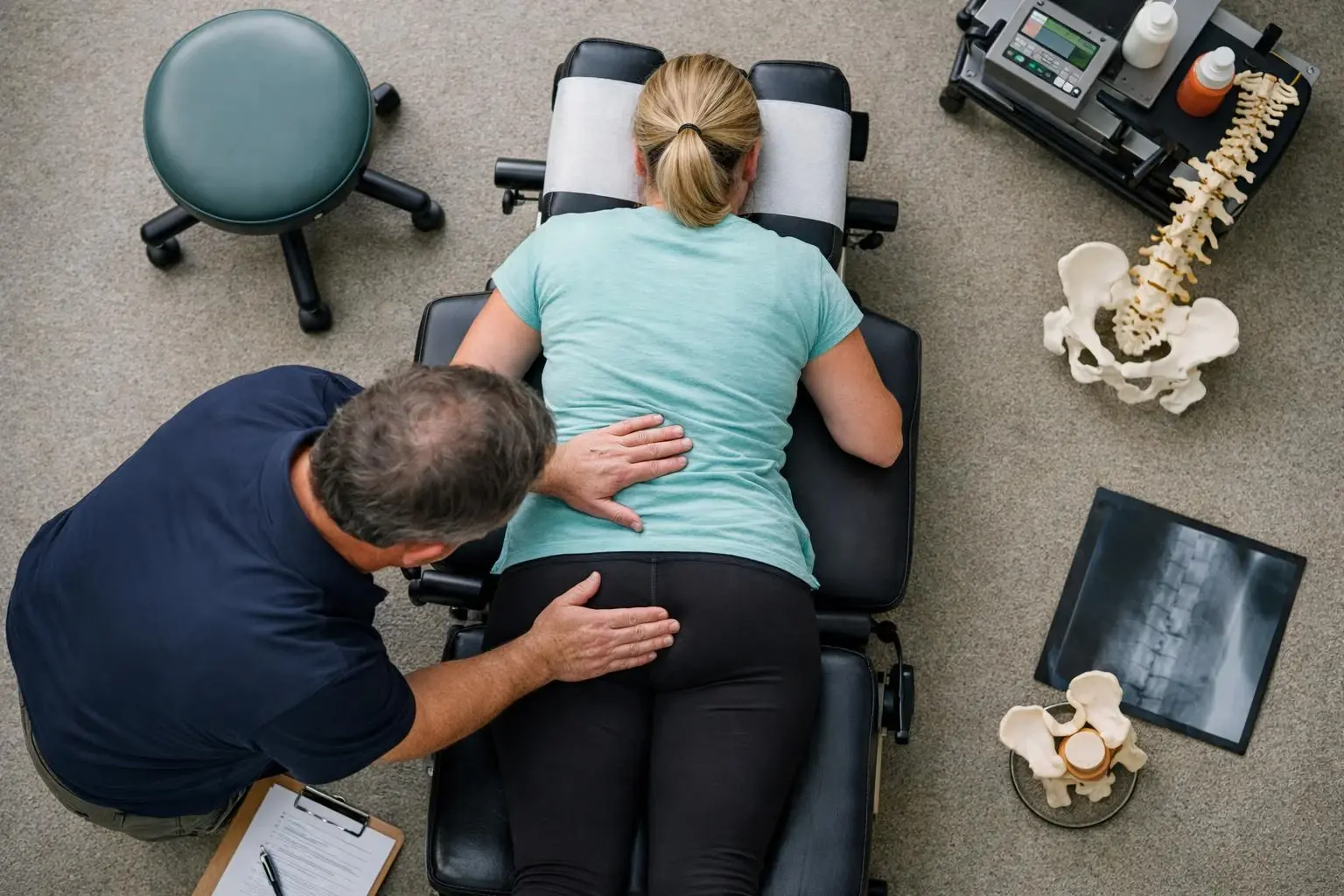
You lie face down on a special table. The table has moving parts.

The chiropractor holds your lower body. They move the top part with a lever.

This makes a gentle pumping motion. It pulls the hurt part of your back.

They change the rhythm for you. They also change it for your comfort.

Each visit lasts 10 to 15 minutes. You may need many visits over weeks.

This method does two things. First, it lowers pressure inside discs.

This helps bulging discs pull back. They stop pressing on nerves.

Second, it helps blood flow. Nutrients and oxygen reach hurt spots.

Many people feel better fast. But full healing takes weeks.

This process is called imbibition. It helps discs heal on their own.

People often feel less leg or arm pain right away.

Why Flexion-Distraction Matters?
How Flexion-Distraction applies to Chiropractor services in Newnan, United States—practical illustration

Flexion-Distraction is an option instead of surgery. It helps many back problems.

It can cut pain and help you move better. It has no surgery risks.

There's no long recovery time. It doesn't use drugs either.

People who can't have surgery like this. It's safe for them.

Studies show it works as well as surgery sometimes. This is true with other therapies.

It also keeps your back healthy long-term. It helps your back move normally.

It cuts nerve irritation too. This stops future pain.

It works with other treatments. This includes exercise and therapy.

Chiropractors can help more people this way. Some might not need surgery.

When Flexion-Distraction Matters Most?

This method helps with certain back problems. It works best for disc injuries.

It also helps with pinched nerves. Common problems include herniated discs.

It helps with sciatica (leg pain) too. Another name is lumbar radiculopathy.

It can treat spinal stenosis (narrow back). It helps with long-term back pain.

Some don't get help from pills or rough treatments. This can help them.

It's good for people who hurt when sitting. It helps those who hurt when bending.

Lifting can also cause pain. This method can help.

Some can't handle quick back pushes. This includes people with weak bones.

It also helps those with bad arthritis. People with recent back surgery can use it.

It's used after surgery too. It helps you move without hurting healing spots.

In Newnan, GA, many work hard jobs. Others have active lives.

This method can help them return to work. It can help them play sports again.

It can help with daily tasks too. They can do these without pain.

This method works well for many. But it can't help everyone.

Some need a doctor or surgery. This includes people with bad nerve problems.

It's not for those with breaks, infections. Or tumors.

A chiropractor must check you first. They will see if it's right for you.
How to Evaluate Flexion-Distraction?

Related Concepts Compared

Flexion-Distraction vs. Spinal Decompression

Spinal decompression typically uses motorized tables to apply a constant pull. While Flexion-Distraction uses rhythmic, hand-controlled flexion and distraction movements for more dynamic treatment.

Flexion-Distraction vs. Traditional Chiropractic Adjustment

Traditional adjustments use quick thrusts to realign joints. While Flexion-Distraction uses slow, gentle stretching to relieve nerve pressure and improve disc health.

Flexion-Distraction vs. Intersegmental Traction

Intersegmental traction uses rollers to passively mobilize the spine. While Flexion-Distraction actively flexes and distracts specific spinal segments under chiropractor control.

Expert Note

Flexion-Distraction is not just a passive stretch—it’s a dynamic rehabilitation tool. The rhythmic motion mimics the natural pumping action of the spine, which is critical for disc nutrition and healing. When performed correctly, it can address both the mechanical and biochemical aspects of disc degeneration.

Common Mistakes or Myths About Flexion-Distraction

  • Assuming Flexion-Distraction is the same as general spinal traction or decompression therapy.
  • Expecting immediate results after just one session—most patients need multiple treatments.
  • Believing it can replace surgery in all cases—some conditions still require medical intervention.
  • Not following the recommended treatment plan, which reduces effectiveness.
  • Confusing it with high-velocity adjustments, which use different techniques and force levels.

Flexion-Distraction in Practice: A Real-World Example

A 45-year-old warehouse worker in Newnan, GA, develops sharp lower back pain and numbness down his right leg after lifting heavy boxes. An MRI shows a herniated disc pressing on a nerve. His chiropractor recommends Flexion-Distraction to reduce the disc bulge and relieve nerve pressure. After 12 sessions over six weeks, his leg pain decreases. And he returns to work without surgery.

Related Services

Related Terms

Disc Herniation

Disc Herniation is a spinal condition where the soft inner gel of a spinal disc leaks through a tear in the disc’s tough outer layer. This leakage can press on nearby nerves, causing pain, numbness. Or weakness in the back, arms. Or legs. Disc herniations often occur in the lower back or neck and are commonly linked to aging, injury. Or strain.

Spinal Decompression

Spinal Decompression is a non-surgical treatment designed to relieve pressure on the spine and nerves. It involves gently stretching the spine using a motorized table or device to create negative pressure within spinal discs, which may help herniated or bulging discs retract, improve nutrient flow. And reduce pain in the back, neck. Or legs.

Chiropractic Adjustment

Chiropractic Adjustment is a precise, hands-on procedure where a licensed chiropractor applies controlled force to a specific joint in the spine or other body part. The goal is to improve alignment, restore proper movement. And reduce pain or discomfort caused by misaligned bones, muscles. Or nerves. Adjustments are typically quick and may produce a popping sound as gas escapes the joint.

Lumbar Spine

Lumbar Spine is the lower part of the human spine, consisting of five large vertebrae labeled L1 through L5. These bones support most of the body’s weight, allow bending and twisting. And protect the spinal cord and nerves that connect to the legs. Problems in the lumbar spine often cause low back pain or sciatica.

ChiropractorNewnan.link

Have Questions About Flexion-Distraction?

Contact ChiropractorNewnan.link for practical guidance on Flexion-Distraction and related chiropractor work in Newnan.

+1 770-692-1041