
What Is Core Stability?
Core Stability is the ability to control and support the spine and pelvis during movement. The concept involves coordinated action among the abdominal, back, pelvic, hip, and breathing muscles. Good core stability helps the trunk remain controlled while the arms or legs move, bend, lift, rotate, or maintain posture.
Quick Facts About Core Stability
Category
Movement control
Used for
Trunk and pelvic control
Common confusion
It is not limited to abdominal strength
Also called
Core strength, Trunk stability
Often discussed with
Corrective Exercise Therapy
Key Takeaways About Core Stability
- Core stability involves coordination, not abdominal strength alone.
- Control should remain steady while the limbs move.
- Core stability is not the same as having visible abdominal muscles.
How Core Stability Works
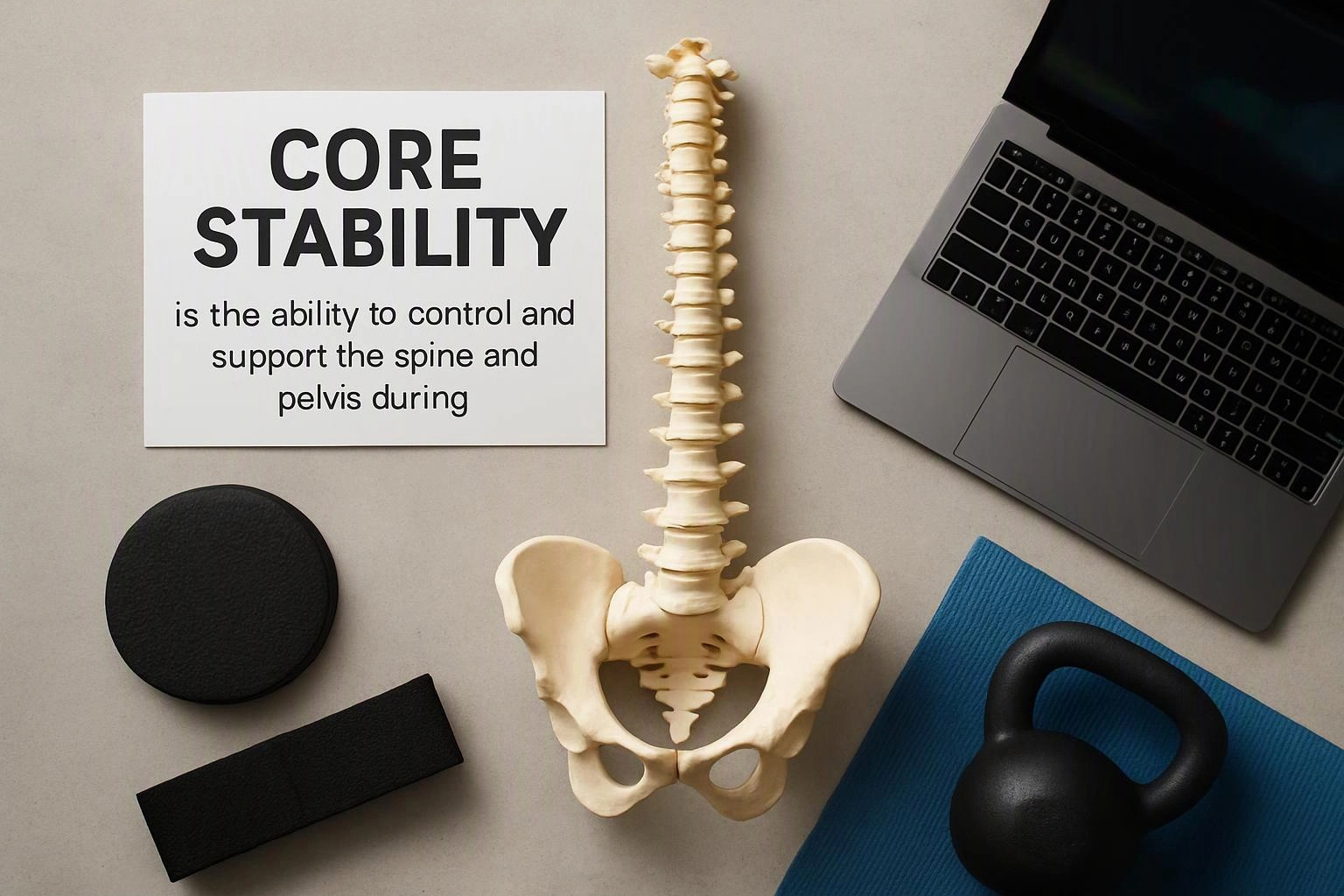
Core Stability works through coordinated muscle activity that keeps the trunk controlled as the body moves. The abdominal wall, back muscles, pelvic muscles, hips, and breathing muscles contribute to that control. The goal is not to hold the spine rigid during every task. The goal is to manage motion with steady alignment and appropriate muscle timing.
Related glossary terms: Biomechanics, Lumbar Spine, Pelvic Girdle Pain.
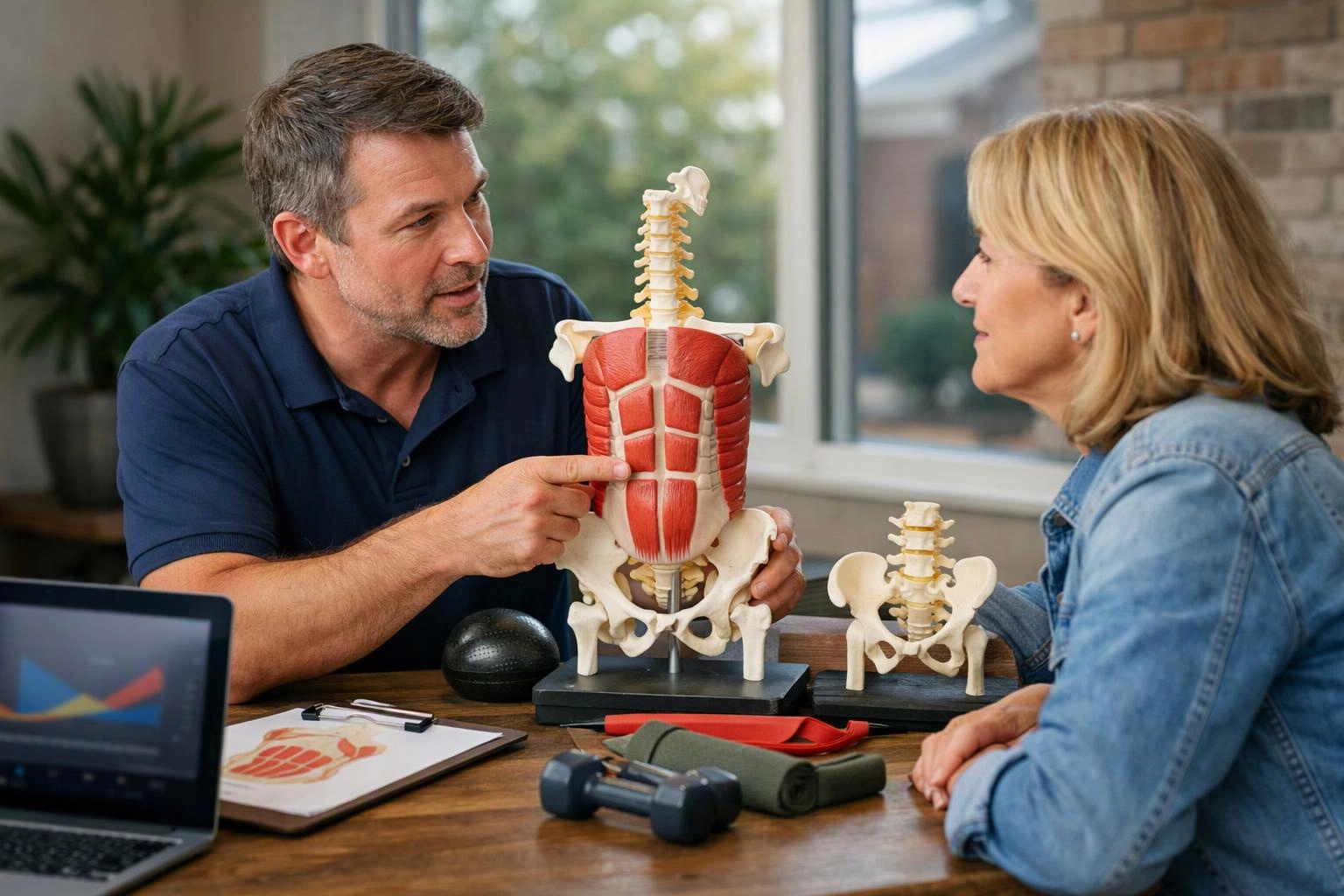
Corrective exercise therapy may examine core stability through movements such as bracing, bending, lifting, reaching, or changing position. A practitioner watches whether the pelvis shifts, the ribs flare, or the lower back takes over the movement. Exercises can then progress from supported positions to tasks that require more balance, control, or limb movement. Motor control and lumbar spine mechanics help describe the movement patterns being observed.
From the Arrowhead Clinic Chiropractor Newnan team
When we assess Core Stability during Corrective Exercise Therapy, we watch how the trunk and pelvis respond while a person moves the arms or legs. We match exercises to the movement pattern we observe, then check whether control remains steady as the task becomes more functional.
Core Stability in Practice: A Real-World Example
A person may practice a controlled bridge during Corrective Exercise Therapy to coordinate the hips, pelvis, and trunk. The exercise can then progress to a standing movement that requires the same control while reaching or lifting.
Related Services
Related Terms
Biomechanics
Biomechanics is the study of how forces affect human movement and how body structures respond during…
Lumbar Spine
Lumbar Spine is the lower section of the spinal column between the rib-bearing back and the…
Pelvic Girdle Pain
Pelvic Girdle Pain is discomfort arising from the joints and supporting tissues around the pelvis. The…
Range Of Motion
Range Of Motion is the available movement at a joint or body region, measured by how…
Arrowhead Clinic Chiropractor Newnan
Have Questions About Core Stability?
Contact Arrowhead Clinic Chiropractor Newnan for practical guidance on Core Stability and related chiropractor work in Newnan.