
What Is Bruxism?
Bruxism is a pattern of clenching, grinding, or tightening the teeth and jaw muscles, often during sleep or periods of concentration. The activity may occur without conscious awareness and can place repeated stress on the teeth, jaw joints, and nearby muscles. Daytime and sleep-related forms describe when the behavior occurs.
Quick Facts About Bruxism
Category
Jaw muscle activity
Used for
Describing clenching or grinding patterns
Common confusion
Not every jaw symptom indicates bruxism
Also called
Teeth grinding, Jaw clenching
Often discussed with
TMJ Treatment
Key Takeaways About Bruxism
- Jaw tightening may happen without conscious awareness.
- Bruxism describes a behavior, not a single cause.
- Jaw pain is not always caused by bruxism.
How Bruxism Works
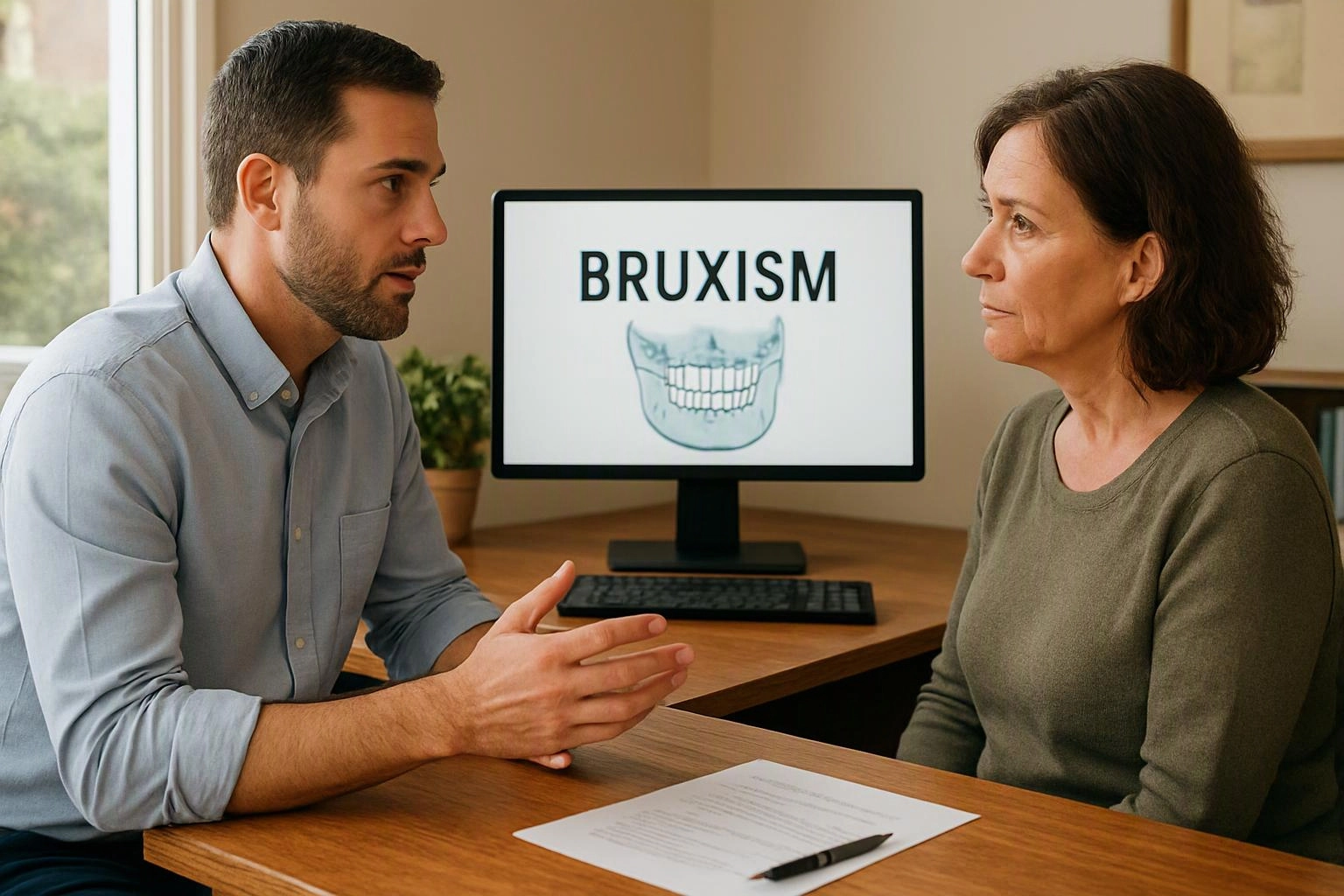
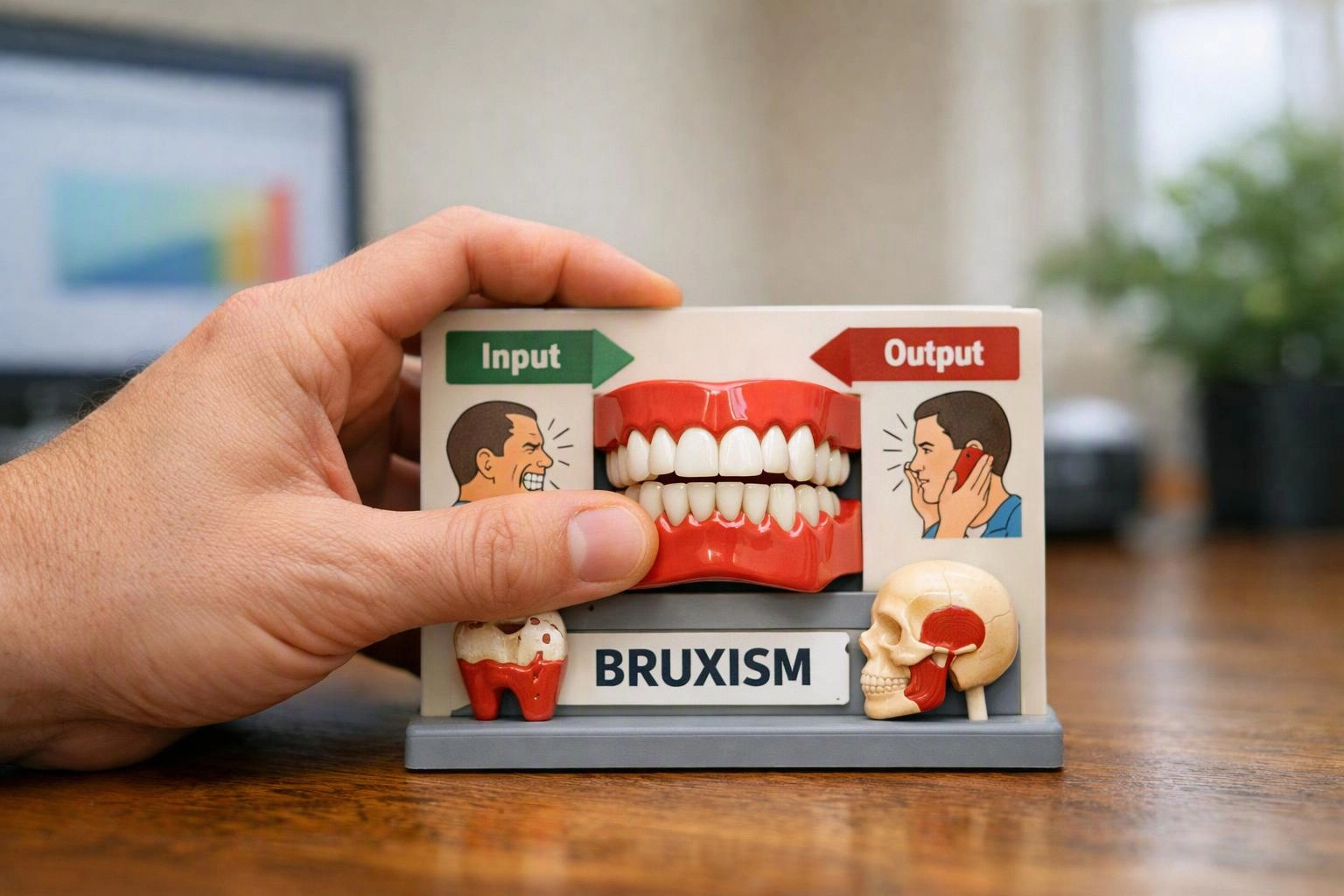
Bruxism involves repeated activation of the jaw muscles that close or stabilize the mouth. Clenching holds the teeth together, while grinding adds movement across the tooth surfaces. Sleep-related activity may occur without awareness, while awake activity can appear during concentration, stress, or sustained effort. The pattern can be assessed through reported symptoms, observed tooth wear, muscle tenderness, and jaw movement.
Related glossary terms: Trigger Point, Joint Mobility, Range Of Motion.
TMJ describes the jaw joints that help the lower jaw open, close, and move side to side. Bruxism can increase the workload on these joints and the surrounding muscles, but joint symptoms can also have other causes. A clinical review considers the jaw, neck, bite, and reported habits together so the term describes a pattern rather than a single symptom.
From the Arrowhead Clinic Chiropractor Newnan team
When we check bruxism during TMJ Treatment, we ask about daytime clenching, sleep-related grinding, jaw fatigue, and tooth sensitivity. We also assess jaw movement, muscle tenderness, and the way the teeth meet. These findings help us distinguish a clenching pattern from symptoms that may involve other structures.
Bruxism in Practice: A Real-World Example
A person who works at a computer may hold the jaw tight during focused tasks and later notice facial fatigue or morning jaw stiffness. A TMJ Treatment assessment can document the pattern alongside jaw movement and muscle tenderness.
Related Services
Related Terms
Trigger Point
A trigger point is a sensitive, tight area within a muscle that may produce local discomfort…
Joint Mobility
Joint Mobility is the capacity of a joint to move freely through its available range while…
Range Of Motion
Range Of Motion is the available movement at a joint or body region, measured by how…
Muscle Spasm
Muscle Spasm is an involuntary tightening of muscle tissue that can restrict movement and create localized…
Arrowhead Clinic Chiropractor Newnan
Have Questions About Bruxism?
Contact Arrowhead Clinic Chiropractor Newnan for practical guidance on Bruxism and related chiropractor work in Newnan.