
Spinal Decompression: Symptoms and Questions to Review First
Spinal decompression therapy candidates may have persistent back pain, radiating leg symptoms, or signs linked to a disc problem, but Arrowhead Clinic Chiropractor Newnan reviews symptoms, health history, and safety concerns before recommending care.
Get a Free Estimate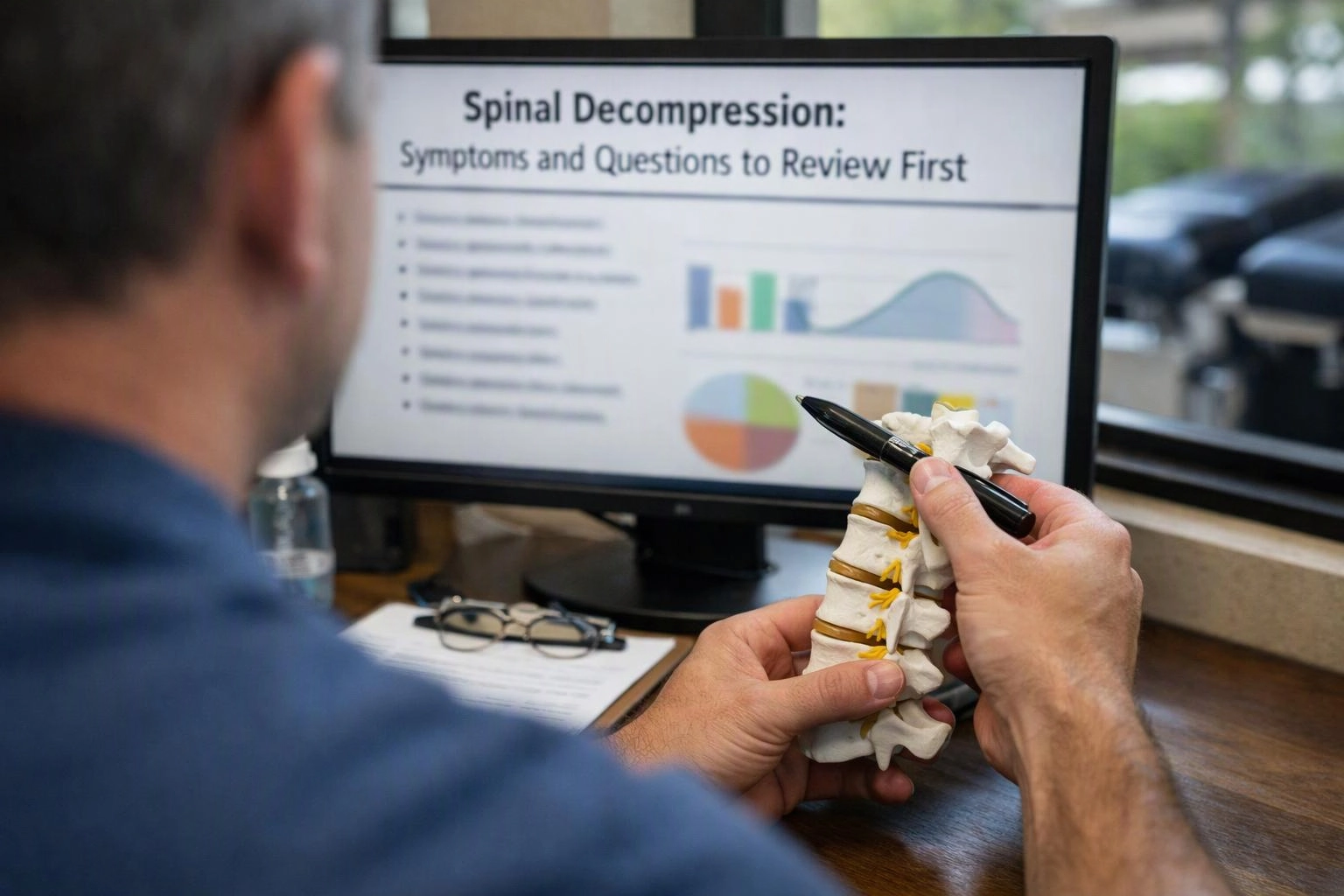
Which Symptoms May Lead Someone to Consider Spinal Decompression Therapy?
Spinal decompression therapy may be considered when persistent back or neck symptoms include radiating pain, numbness, tingling, or weakness that may involve a spinal disc or irritated nerve.
Back pain may stay near the lumbar spine, while sciatica can send pain into the hip or leg. Neck pain can also spread into an arm when nerve irritation or a disc problem affects nearby nerve tissue.
Our team connects the pain pattern with movement findings and your clinical history. You can review our Spinal Decompression Therapy service page for more information about this non-surgical care option.
What Red Flags Should Be Reviewed Before Spinal Decompression Therapy?
Red flags mean spinal decompression therapy should wait for urgent medical evaluation when severe or rapidly worsening neurological symptoms or serious injury are present.
We review warning signs before discussing treatment suitability. Seek urgent medical care for symptoms such as:
These warning signs can point to a condition that needs prompt medical attention. The guide “Back Pain Warning Signs: When to Seek an Evaluation” can also help you organize concerns before seeking care.
Who May Be a Candidate for Spinal Decompression Therapy?
A spinal decompression therapy candidate is someone whose symptoms and health history support a mechanical spine-related problem that can be safely evaluated for non-surgical care.
Persistent back pain, sciatica, a herniated disc, or degenerative disc changes may lead someone to request an evaluation. These findings do not make treatment suitable by themselves.
We review treatment history, current symptoms, physical findings, and safety concerns before recommending lumbar or cervical decompression therapy. Our chiropractic evaluation helps us decide whether the care fits your condition.
What Should You Review Before Your Consultation?
Before a spinal decompression therapy consultation, prepare a clear record of how symptoms began, where they occur, and what changes them.
The following checklist helps our team understand your concerns and treatment history.
Before the consultation
What Happens During a Spinal Decompression Therapy Evaluation?
A spinal decompression therapy evaluation reviews symptoms, movement, neurological findings, health history, and available imaging before we determine whether the service fits the case.
Our chiropractic evaluation may include a physical examination, range of motion testing, posture review, and checks for neurological symptoms. We also compare your clinical history with available spinal imaging when imaging is relevant to the care decision.
During the visit, we look for findings that may relate to a spinal disc, nerve root, vertebra, or spinal canal. We use those findings to discuss treatment suitability and possible next steps.
During the evaluation
What Questions Should You Ask Before Starting Treatment?
Before starting spinal decompression therapy, ask how the treatment relates to your symptoms, what screening we use, what the plan includes, and how to request one of our Free Consultations.
Clear treatment questions help you understand the goal of care and how we will review your response. Use this list during your discussion with our team.
How Do We Review Your Symptoms After the Evaluation?
Arrowhead Clinic Chiropractor Newnan reviews symptom response and functional changes after evaluation so we can determine whether the care plan remains appropriate.
We compare your pain pattern with changes in movement, activity tolerance, and radiating symptoms. A change in one symptom does not automatically determine the next step.
Our team uses treatment reassessment to guide care decisions. We adjust the care plan when your findings or response show that a different approach is needed.
What Should You Track After Each Session?
After each session, track pain response, mobility, radiating symptoms, and any new changes that could affect the care plan.
Simple symptom tracking gives our team clearer information during follow-up discussions. Contact us promptly about new or worsening neurological symptoms.
How Can You Prepare for a Follow-Up Discussion?
A follow-up evaluation is easier to understand when you bring a symptom journal that records treatment response and activity tolerance.
Review what changed after each session and identify which daily activities became easier or harder. Bring questions about your pain pattern, mobility, and any new symptoms.
We use this information to support careful care decisions. The goal is to keep the treatment plan connected to your current findings and functional changes.
After each session
Questions About Spinal Decompression Symptoms
Can sciatica symptoms make someone a candidate for spinal decompression therapy?
Arrowhead Clinic Chiropractor Newnan may evaluate sciatica symptoms for spinal decompression therapy when the symptom pattern and health history support safe non-surgical care.
Can numbness or tingling be related to a disc problem?
Yes, numbness or tingling can be related to nerve irritation from a disc problem, but our team reviews the full symptom pattern before drawing a treatment conclusion.
Should persistent back pain be evaluated before choosing spinal decompression therapy?
Yes, persistent back pain should be evaluated before choosing spinal decompression therapy so we can review possible causes, red flags, treatment history, and safety concerns.
What information should I bring to a spinal decompression therapy consultation?
Bring your symptom history, pain locations and triggers, numbness or tingling details, weakness concerns, previous treatment information, and relevant imaging.
Is spinal decompression therapy appropriate for every type of back pain?
No, spinal decompression therapy is not appropriate for every type of back pain. Our evaluation determines whether the symptoms, findings, health history, and safety screening support this approach.
Arrowhead Clinic Chiropractor Newnan reviews your symptoms, health history, and treatment questions before discussing spinal decompression therapy. Request a Free Consultation through our contact page to discuss your concerns and next steps.
Related Resources
Using Insurance or Paying Out of Pocket for Chiropractic Care
Compared ToPaying for Chiropractic Care After a Car Accident: Coverage and Cost Questions
Brand vs BrandChoosing a Chiropractor in Newnan: What to Compare Before Booking
Compared ToChiropractic Adjustment vs. Corrective Exercise for Back Pain