
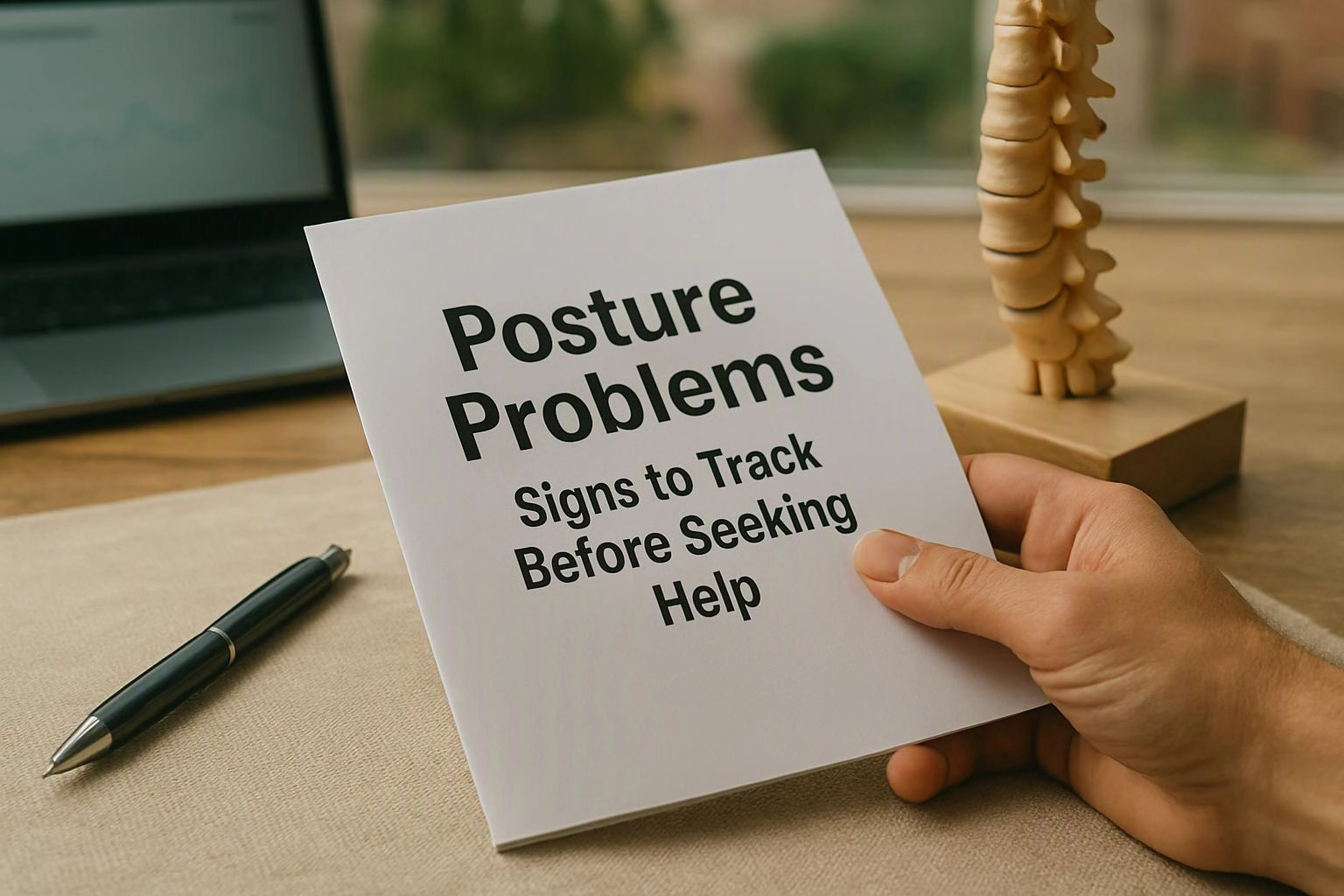
Posture Problems: Signs to Track Before Seeking Help
Posture problem symptoms include recurring neck or back discomfort, stiffness, uneven alignment, fatigue, and difficulty sitting or standing upright; Arrowhead Clinic Chiropractor Newnan evaluates movement patterns and discusses whether posture correction or corrective exercise therapy fits your needs.
Get a Free EstimateWhat Signs Suggest a Posture Problem?
Posture problems commonly show up as recurring discomfort, stiffness, uneven shoulders or hips, muscle fatigue, and difficulty maintaining an upright position.
Neck discomfort and back discomfort may appear after sitting, standing, walking, or working at a desk. Rounded shoulders, forward head posture, and uneven shoulder alignment can also suggest changes in spinal alignment. Joint stiffness and limited range of motion may affect how easily you move.
Our team reviews these signs as part of your movement patterns instead of viewing posture as a single fixed position. You can learn more about our Posture Correction approach when recurring symptoms make daily movement harder.
Why Can Sitting or Standing Upright Feel Difficult?
Difficulty sitting or standing upright can reflect limited mobility, muscle tension, reduced endurance, or movement habits that make a neutral posture hard to maintain.
Spinal alignment is influenced by how the head, neck, shoulders, spine, pelvis, and hips work together. Core endurance and back muscle endurance can affect how long you maintain an upright position before posture fatigue appears.
Workstation habits, repeated slouching, and low body awareness may reinforce a position that feels easier in the short term. We assess mobility and muscle tension to understand which movement patterns may be contributing to the problem.
Before You Seek Help, Track These Posture Changes
A symptom journal can show when posture changes appear and which activities make them better or worse. Record observations without trying to diagnose the cause yourself.
Before daily tracking
What to Notice During Daily Activities
Daily movement can reveal posture changes that are easy to miss while you are standing still. Observe how your body moves during normal tasks, and stop an activity if it causes sharp or worsening symptoms.
During regular activities
After Tracking Symptoms, Decide What to Share With Us
Your notes help us connect symptoms with daily movement demands and specific activities. Bring clear observations so our team can focus the evaluation on your concerns.
After you have recorded changes
Arrowhead Clinic Chiropractor Newnan uses these observations with a posture and movement evaluation. Contact our team through our contact page to discuss your concerns and request a Free Consultation.
Get a Free EstimateWhich Posture Symptoms Need Prompt Medical Attention?
Sudden neurological changes, loss of coordination, loss of bladder or bowel control, or severe rapidly worsening pain require prompt medical attention rather than routine posture coaching.
These warning signs can point to a condition that needs urgent medical assessment. Do not wait for a routine posture visit when symptoms appear suddenly or worsen quickly.
When Should You Seek Help for Posture Problems?
Seek help when posture symptoms persist, recur, limit daily activities, or remain difficult to explain after you adjust routine habits.
A chiropractic evaluation may help when neck and back discomfort keeps returning, range of motion decreases, or sitting and standing become harder. Our team also considers symptoms that occur without pain when they affect balance, coordination, or normal movement.
We discuss whether Posture Correction or Corrective Exercise Therapy fits your goals after reviewing your symptoms and movement needs. Care should match the pattern we find rather than rely on a generic posture position.
How Arrowhead Clinic Chiropractor Newnan Evaluates Posture and Movement
Arrowhead Clinic Chiropractor Newnan reviews your reported symptoms, posture, movement patterns, and functional limitations to determine whether Posture Correction or Corrective Exercise Therapy is appropriate.
Our posture assessment considers spinal alignment, range of motion, shoulder and pelvic position, and how you perform meaningful daily movements. A movement assessment helps us see whether stiffness, muscle tension, reduced endurance, or compensation affects your posture.
We explain what we observe and connect the findings to your posture correction goals. Free Consultations give you an opportunity to discuss your concerns and understand the next step.
Questions About Posture Problem Symptoms
Can poor posture cause neck or back discomfort?
Yes, poor posture can contribute to neck or back discomfort by increasing muscle tension and changing movement patterns. Arrowhead Clinic Chiropractor Newnan reviews the location, timing, and activity triggers of discomfort during a posture evaluation.
Can posture problems affect balance or coordination?
Yes, posture problems can affect how the body organizes movement and may be noticed as balance or coordination changes. Sudden or severe changes need prompt medical attention.
Should I seek help if posture changes do not cause pain?
Yes, seek help if painless posture changes affect movement, balance, coordination, range of motion, or daily activities. A focused evaluation can clarify whether the changes need attention.
What should I bring to a posture evaluation?
Bring your symptom notes, activity triggers, previous injury details, and a clear description of your posture correction goals. These details help our team connect your concerns with the movement assessment.
Related Resources
Posture Correction Providers Worth Comparing in Newnan (2026)
Brand vs BrandCorrective Exercise Therapy Companies Worth Comparing in Newnan (2026)
Compared ToChiropractic Adjustment vs. Corrective Exercise for Back Pain
Compared ToChiropractor vs. Physical Therapy for Back Pain: What to Compare