A Child’s Back or Neck Pain: What Parents Should Track
Child back or neck pain needs evaluation when it follows an injury, persists, worsens, limits normal activity, or appears with red flags such as weakness, numbness, fever, or changes in bladder or bowel control. Arrowhead Clinic Chiropractor Newnan reviews the symptom history, movement, and functional changes with parents and explains whether pediatric chiropractic care is appropriate.
Get a Free EstimateWhat Should Parents Track Before an Evaluation?
Before an evaluation, parents should record where the child feels pain, when symptoms began, what happened before the symptoms, and which activities change the discomfort. These parent observations help us understand child back pain, child neck pain, and possible functional limitations.
Use the following Before checklist to keep the history clear and easy to discuss. Our team can use these notes during a pediatric assessment.
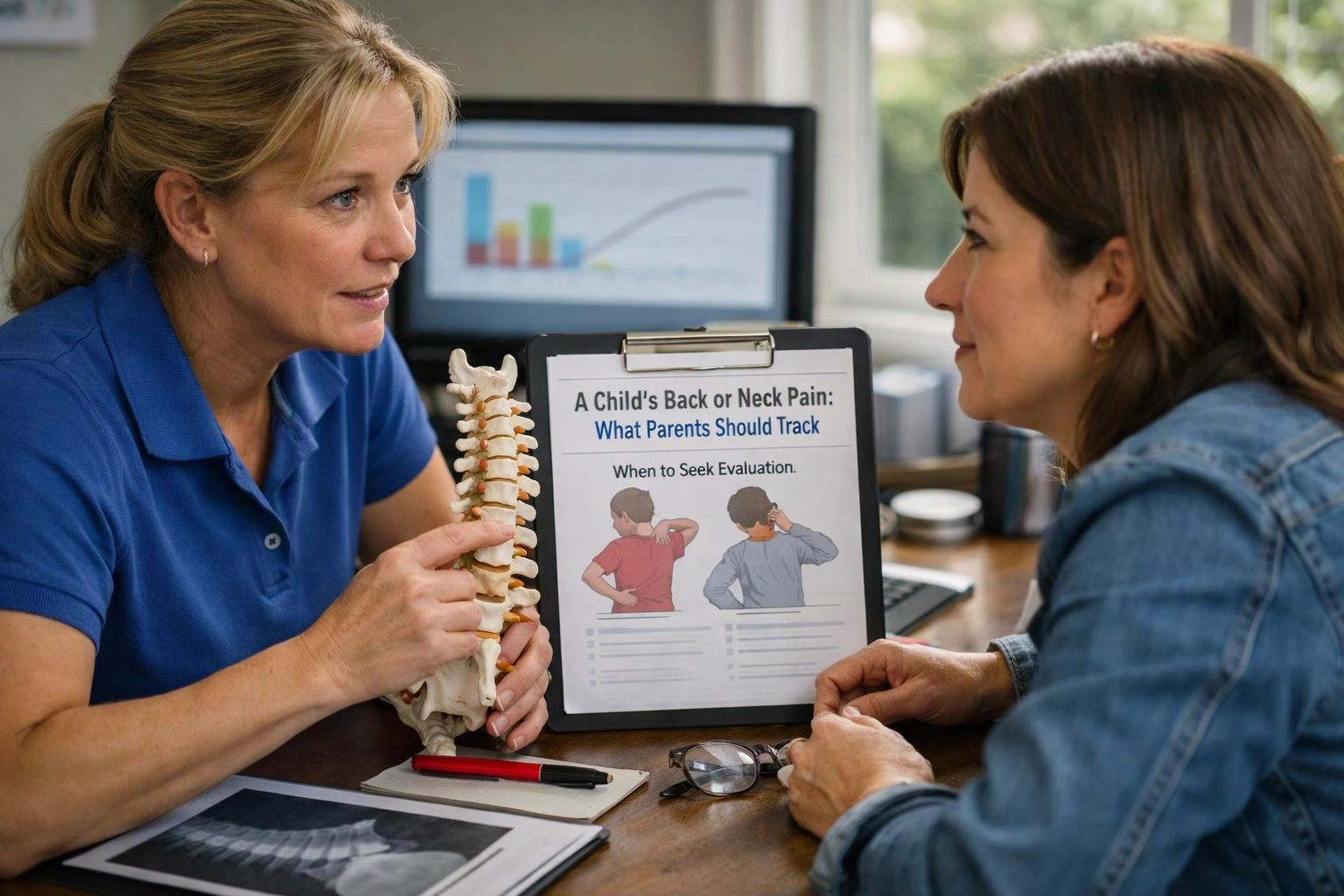
Parents can also use our guide, Back Pain Warning Signs: When to Seek an Evaluation, when they are unsure whether symptoms need prompt attention.
What Does the Pain Pattern Tell You?
A child’s pain pattern helps parents and clinicians understand whether symptoms are linked to movement, activity, rest, injury, or a worsening condition.
Pain intensity describes how strong the discomfort feels, while pain frequency shows how often it occurs. Parents should note whether pain appears with movement, improves with rest, interrupts sleep, or continues during quiet activities.
Pain progression also matters. Symptoms that become more frequent, spread to another area, or limit more activities deserve careful review. Night pain, persistent pain, and pain after injury should be included in the child’s symptom history.
What Should Parents Track During Daily Activities?
Daily activity notes show how child back or neck pain affects movement, sleep, school, and play. During this During checklist, parents should observe normal activities without pushing the child through pain.
Our team uses these details to connect symptoms with movement tolerance and functional changes.
Which Back or Neck Pain Red Flags Need Prompt Evaluation?
Child back or neck pain needs prompt medical evaluation when red flags include weakness, numbness, fever, loss of bladder or bowel control, significant injury, or worsening symptoms.
Parents should not wait for routine tracking when a serious warning sign appears. We encourage parents to seek appropriate medical care promptly and to share the child’s symptom history with the pediatric healthcare provider.
What Should Parents Track After Rest or Activity Changes?
After rest or an activity change, parents should track whether symptoms improve, remain the same, or return with normal movement. This After checklist helps show the child’s activity tolerance and whether symptoms recur.
Bring these observations to the evaluation so we can compare symptom changes with function and range of motion.
How Do We Review a Child’s Back or Neck Pain?
Arrowhead Clinic Chiropractor Newnan reviews the child’s symptom history, movement, posture, and functional changes with the parent before discussing whether chiropractic care fits the situation.
Our pediatric chiropractic assessment begins with the information parents bring and the child’s current concerns. We perform a movement assessment, consider range of motion, and look at how symptoms affect daily activities.
Parent observations help us understand functional limitations that may not appear during a brief office visit. We explain what we find in clear language and discuss whether Pediatric Chiropractic Care is appropriate.
How Should Parents Discuss Pediatric Chiropractic Care?
Parents should discuss pediatric chiropractic care with the child’s healthcare provider, especially when symptoms are persistent, follow an injury, or include warning signs.
Care coordination helps keep the child’s treatment goals clear. Share the symptom diary, injury history, current symptoms, and any changes in school or sports participation with the pediatric healthcare provider.
Parent consent is part of the care discussion. We answer questions about the proposed approach, explain care boundaries, and support referral decisions when another healthcare evaluation is needed.
What Should Parents Ask About Pediatric Chiropractic Experience?
Parents should ask Arrowhead Clinic Chiropractor Newnan how the team evaluates children, adapts care to the child’s symptoms, communicates with parents, and decides when another healthcare evaluation is needed.
Useful questions focus on the child-specific assessment and the treatment approach. Ask how we will review movement, posture, pain triggers, and functional limitations.
Parents can also ask how we explain findings, how we track progress, and what care boundaries guide referral decisions. Clear communication helps families understand the care plan before they decide how to proceed.
What Happens When Parents Request a Consultation?
Arrowhead Clinic Chiropractor Newnan provides Free Consultations so parents can discuss the child’s symptoms, tracking notes, and potential care options with our team.
During a pediatric chiropractic consultation, we review the symptom history, injury context, daily activity changes, and concerns about movement or sleep. We explain what the evaluation can address and discuss whether care matches the child’s needs.
Parents can bring a symptom diary and questions about headaches, back pain, neck pain, school participation, or sports participation. To begin the care discussion, use our contact option below.
Contact our team about a pediatric chiropractic consultation
Arrowhead Clinic Chiropractor Newnan is ready to discuss your child’s symptoms, tracking notes, and potential care options.
Questions About Tracking a Child’s Back or Neck Pain
Can a child’s backpack or sports activity contribute to back or neck pain?
Yes, a child’s backpack or sports activity can contribute to back or neck discomfort when the activity changes posture, movement, or load. Arrowhead Clinic Chiropractor Newnan reviews the timing of symptoms and the child’s activity pattern to understand whether those factors may be related.
Should parents keep a symptom diary for a child with back or neck pain?
Yes, a symptom diary can help parents record pain location, timing, triggers, activity impact, sleep changes, and recurring symptoms. Bring the diary to the evaluation so our team can review the pattern with you.
Can headaches be related to a child’s neck pain?
Yes, headaches can occur along with neck pain, but the cause needs careful evaluation. Parents should record when headaches appear, whether neck movement affects them, and whether other warning signs occur.
What information should parents bring to a pediatric chiropractic consultation?
Parents should bring the child’s symptom diary, pain location, symptom onset, injury history, activity changes, sleep concerns, and information about school or sports participation. Notes about weakness, numbness, fever, bladder or bowel changes, or worsening pain should also be shared promptly.
Related Resources
Paying for Chiropractic Care After a Car Accident: Coverage and Cost Questions
Compared ToChoosing Chiropractic Care for a Child: Questions for a Pediatric-Focused Provider
Brand vs BrandChoosing a Chiropractor in Newnan: What to Compare Before Booking
Compared ToChiropractic Adjustment vs. Corrective Exercise for Back Pain