
After a Car Accident: Symptoms to Check and Next Steps
Car accident symptoms can indicate possible injuries and guide appropriate next steps. Arrowhead Clinic Chiropractor Newnan evaluates accident-related concerns, explains appropriate next steps, and offers Free Consultations.
Get a Free EstimateWhat Should You Check After a Car Accident?
Car accident symptoms can involve the neck, back, head, muscles, joints, and nervous system. Some symptoms may become noticeable after the initial shock fades.
Check for accident-related pain, stiffness, bruising, tenderness, and reduced range of motion. Also watch for headache, dizziness, numbness, weakness, or other neurological symptoms. A symptom checklist can help you notice changes that deserve medical evaluation.
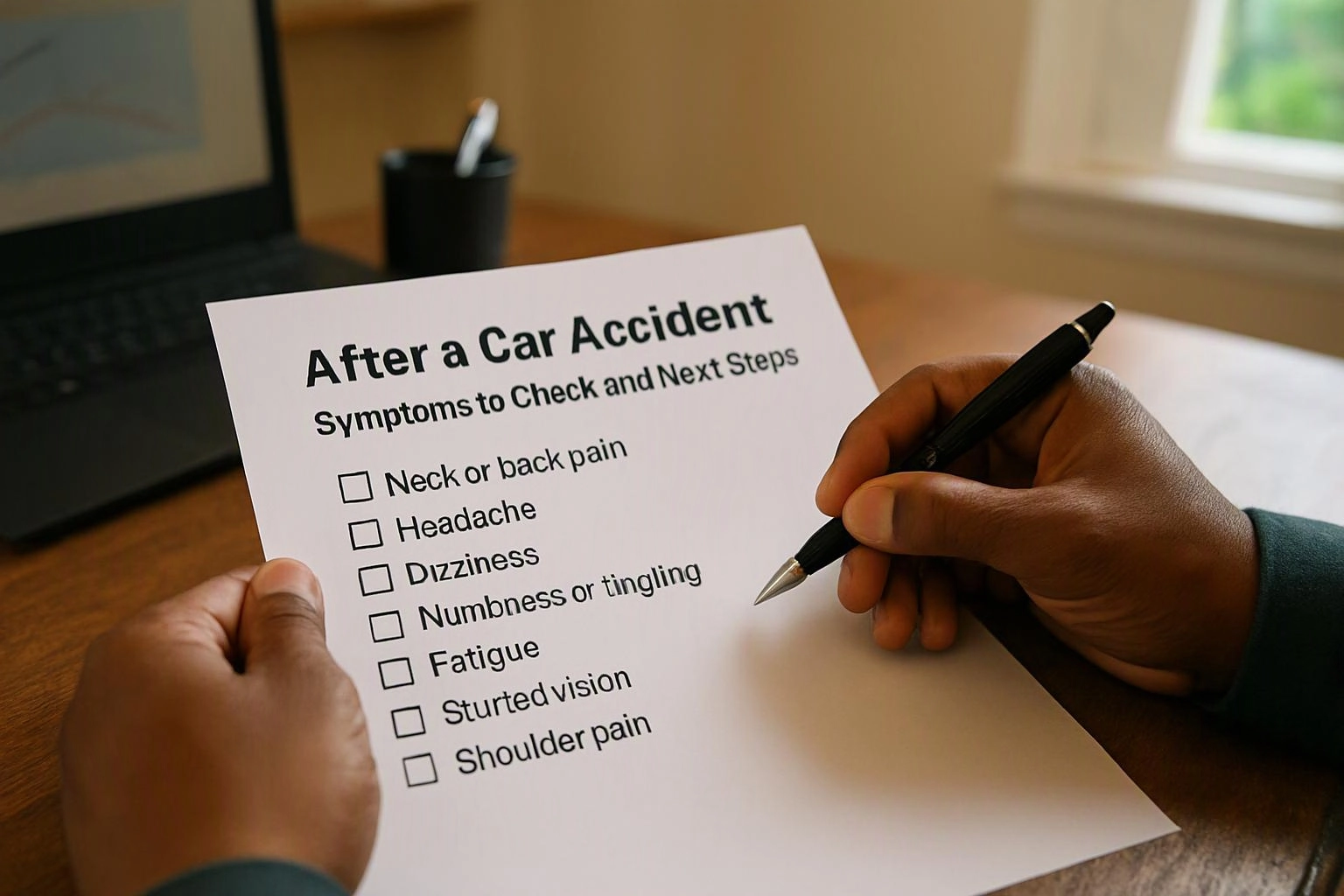
Our team can review accident-related concerns through a chiropractic evaluation when emergency warning signs are not present. We also explain when symptoms call for emergency care or another form of medical evaluation.
Before You Leave the Accident Scene
Before leaving the accident scene, protect your safety and record information that may support later injury documentation. Do not place yourself in danger to inspect vehicles or collect evidence.
Scene information can support accident documentation, but safety comes first. We can use your account of the crash and symptom progression during a later injury evaluation.
Why Can Symptoms Appear Later?
Yes, car accident injuries can show up later because stress responses, inflammation, and soft tissue damage may make symptoms less obvious immediately after a crash.
Whiplash is a common crash-related neck injury pattern involving forceful movement of the head and neck. Delayed pain can occur when adrenaline decreases and the body’s inflammatory response develops.
Soft tissue injury may affect muscles, ligaments, and other supporting tissues. Muscle strain, joint pain, neck pain, back pain, headache, and stiffness can appear or become clearer as normal activity resumes.
We pay attention to symptom progression instead of relying only on how you felt at the accident scene. New or worsening concussion symptoms and neurological symptoms should receive prompt medical attention.
What to Do During the First Health Check
A first health check should record the symptoms you notice, when they began, and how movement affects them. This information helps us understand the injury pattern and choose appropriate next steps.
We use your symptom report with movement findings and injury history. Severe or rapidly changing symptoms require emergency medical attention before chiropractic care is considered.
Which Symptoms Need Emergency Medical Attention?
Emergency medical attention is appropriate for severe or rapidly worsening symptoms, including trouble breathing, loss of consciousness, confusion, uncontrolled bleeding, or new weakness.
Call emergency services or seek emergency care when any of these red flags are present:
These emergency warning signs may point to serious injury and need urgent medical evaluation. Our team can discuss chiropractic evaluation after emergency concerns have been assessed and managed.
What to Record After You Leave the Scene
After leaving the scene, keep a clear record of symptoms, healthcare visits, and changes in daily activities. Consistent notes can make your medical records and accident documentation easier to review.
We use these details to understand symptom progression and functional limitations. Clear injury documentation also helps connect reported symptoms with the collision timeline.
How We Evaluate Car Accident Injuries
Arrowhead Clinic Chiropractor Newnan evaluates the reported symptoms, injury history, movement limitations, and affected body areas before explaining whether chiropractic care may be appropriate.
Our musculoskeletal assessment may consider range of motion, tenderness, posture, muscle strain, joint pain, and functional limitations. We also ask how symptoms affect work, sleep, driving, and routine activities.
Whiplash treatment depends on the findings from the evaluation and the symptoms being addressed. We explain our observations, discuss appropriate care planning, and identify when another medical evaluation or referral is needed.
For more information about accident-related care, see our Car Accident Injury Treatment service.
Should You See a Chiropractor After a Car Accident?
Yes, a chiropractic evaluation may help assess accident-related musculoskeletal symptoms, especially neck or back pain, stiffness, reduced movement, or tenderness.
Chiropractic care may be appropriate when emergency conditions have been addressed and symptoms involve the muscles, joints, or spine. Our team reviews your history and current symptoms before discussing car accident injury treatment.
Whiplash, neck strain, back strain, and muscle soreness can affect movement and daily function. We use the examination findings to explain whether chiropractic care fits your needs and what other next steps may be appropriate.
How Do You Arrange the Next Step?
Arrowhead Clinic Chiropractor Newnan uses a Free Consultation to review accident-related concerns and explain available care or referral next steps.
Bring your symptom journal, accident documentation, and medical records when available. We discuss the symptom timeline, current limitations, and findings from the evaluation so you can make an informed care decision.
When legal guidance is needed, we can explain the role of an attorney referral service as a separate part of planning. Legal decisions remain separate from our chiropractic assessment and care recommendations.
Contact us through our contact page to arrange a Free Consultation and discuss your next step.
Questions About Car Accident Symptoms
Can whiplash symptoms start days after a car accident?
Yes, whiplash symptoms can start days after a car accident as inflammation and soft tissue irritation develop. Arrowhead Clinic Chiropractor Newnan reviews the symptom timeline and movement changes during a chiropractic evaluation.
What should I tell a chiropractor after a car accident?
Tell the chiropractor when the crash occurred, how the impact happened, which symptoms you noticed, and how those symptoms have changed. Include neck pain, back pain, headache, dizziness, numbness, reduced movement, prior injuries, and missed activities.
Should I keep a symptom journal after a crash?
Yes, a symptom journal can show when pain, stiffness, dizziness, or other symptoms begin and how they progress. Record changes in movement, sleep, work, and daily activities.
Can I have an injury if I do not feel pain immediately?
Yes, an injury can be present even when pain is not immediate because adrenaline and early stress responses can mask symptoms. Monitor for delayed pain, stiffness, headache, dizziness, numbness, and reduced range of motion.
Related Resources
Attorney referral service Companies Worth Comparing in Newnan (2026)
Brand vs BrandArrowhead Clinic Chiropractor Newnan vs Local Attorney referral service Alternatives in Newnan: Side-by-Side Comparison
Compared ToPaying for Chiropractic Care After a Car Accident: Coverage and Cost Questions
Compared ToChoosing Accident-Injury Chiropractic Care With or Without an Attorney Referral